


















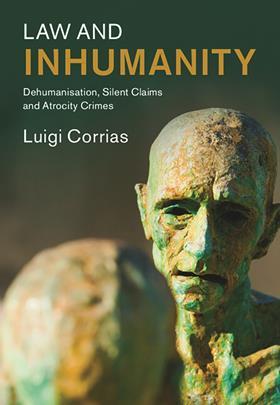
Law and Inhumanity: Dehumanization, Silent Claims and Atrocity Crimes
Luigi Corrias
£100, Cambridge University Press
★★★★✩
This volume is another welcome addition to the prestigious Law in Context series of legal textbooks and treaties. The series is a fitting tribute to the late professor William Twining, one of its founding editors, and to his contribution to legal scholarship and legal education. Twining thought about the legal processes constituting the ‘global’ legal order. I wonder what he would have thought about recent events as the doors of that global legal order and its institutions were kicked open by a new Legal Empire.
This book is an important and timely intervention on these events and on the status of those institutions and the principles they sought (I use the past tense deliberately) to represent, apply and implement at the edges of human conduct. These include legal institutions and principles based upon ideas of justice within a common humanity, claiming international application but with limited universal authority to do so.
My most recent book review was that of an excellent legal biography of the reasonable person. That title also sits within the Law in Context series. It examined the figure of the Reasonable War Criminal standing in the field of war, within the gates of the camp, and before an international tribunal. I concluded by noting the observation of the author that ‘the reasonable person is always someone else’ – also noting additionally, ‘your passenger on the bus’.
Luigi Corrias confronts us with the Inhuman Being, in the specific legal sense of a defendant standing before the International Criminal Court and subject to international criminal law (ICL), an institution and a code with claims to a universal authority and authenticity. Here, standing before the court, is ‘The Inhuman on Bus’. The book also invites us to recognise and listen to the Dehumanised being – or subject – bearing witness in silence to the tribunal in which humanity stands judged in its failure, having reached the threshold of experience created, enabled, permitted by the Inhuman Perpetrator.
As I read this book, the international legal order (whether defined as a Western Hemisphere construct, neo-Enlightenment European ideal or post-colonial and post-communist dominant normative imposition of values, masking economic ends) has been thrown into a state of disorder. This has been achieved less through ideological zeal than via fiscal gangsterism of power grabs, which liberal elites cannot interpret, engage with or comprehend. As a precursor, and as a shadow over this book, the US, which has never acknowledged the ICC, issued sanctions against the judges and prosecutors who are seeking to investigate allegations of war crimes in Gaza. And then the US asserted its power over Venezuela.
Gaza and Venezuela inhabit two different legal universes in terms of status. Gaza is within the universe of violations of international humanitarian law and ICL. Venezuela is now within the universe of violations of international public law and the nature of sovereign state integrity, as maps, not codes, become the determinant of security.
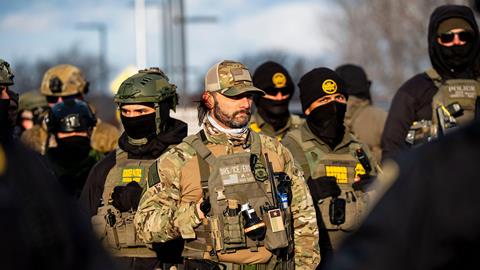
The fatal shooting of Renée Nicole Good by an ICE agent in Minneapolis inhabits both spheres of juridification, where human, inhuman and the processes of dehumanisation collided: ‘The concept of dehumanisation is also necessary to capture the specific violence used by political regimes that do not allow any dissident voices,’ or a ‘paid agitator or professional troublemaker’ (Trump, as reported in the Guardian, 10 January 2026).
I feared the compelling analysis presented in this book had been overtaken by events because of what I was witnessing through 24-hour global news.
The claims to secure the integrity and confidence of the ICL and the functions – symbolic or not – of the ICC made by the author encompass: interrogation of the universal dehumanised human with her silent claim to justice (Chapter 4); the perpetrator asking to be integrated back into humanity (Chapter 3 – the case of Comrade Duch, a former senior figure of the Khmer Rouge convicted of crimes against humanity in Cambodia); and the perpetrator as victim, who as the Inhuman cannot recognise Humanity – and is therefore a ‘Strange Figure’, according to the author (Chapter 2 (at 2.5) – the case of Daniel Ongwen, Commander of the Sinia Brigade of the Lord’s Resistance Army in Uganda).
This book throws the issues into a sharp focus, and the author rightly interrogates the welcome intervention of an ICC prosecutor: ‘We are witnessing a pandemic of inhumanity: to halt the spread, we must cling to the law… Amid this landscape, we must reject desensitisation. We cannot allow ourselves to be anaesthetised to this level of anguish. We must always remember that those we see pulled from the rubble, those awaiting news of family members abducted or killed, are the same as us. We should approach their plight with the same sense of urgency, empathy and compassion that we would if they were our own children, parents, friends or loved ones … It is in times like these, when the vulnerable feel that they may have been forgotten, that we need the law more than ever’ (Guardian, 10 November 2023, cited at p122).
It is the use of ‘we’ in the context described by the ICC prosecutor and the commentary of the author that supplies the core of the problems. It is the ‘we’, which claims to be a universal humanity protected through a normative legal order and applied through institutions claiming universal authority, constantly seeking affirmation to adjudicate upon the crimes against this humanity – atrocity crimes – which enabled the Inhuman to inflict suffering upon them, who are Dehumanised (as discussed at Chapter 4 in the limit experience of Jean Améry who resisted Nazism and was tortured by the Gestapo. He reflected upon his agony in At the Minds Limits (1966)).
The author asks, ‘How the legal order can respond to structural injustice and social suffering?’ (p9) when these silent claims of injustice and suffering are made at the limits of that imposed legal order and adjudicated upon by its institutions. The author suggests that, as the ICC prosecutor urges, we must ‘reject desensitisation’ and exhibit attentiveness and care.
This is a mindful request made by Corrias and an ambition for liberal legal thinkers, but a far more problematic ambition for ICC prosecutors.
Christopher Stanley is the Domestic & International Human Rights Advocate with Relatives for Justice








No comments yet