






















Do We Have the Right to Die? (Think Again) One big question. Two alternative answers
Lady Hale, Rowan Williams
£16.99, Bodley Head
★★★★★
On 11 September, the House of Commons voted against the Terminally Ill Adults (End of Life) Bill in its current form. I had followed the bill during its previous journey when the Commons voted in favour, but the Lords did not. Both these books, which I had read in August, marshalled my thoughts.
For a solicitor practising in vulnerable client law and mental capacity, I opened Do We Have the Right to Die? with anticipation. I did not expect thrills on such a deeply sensitive subject. But after the bill had exhausted parliamentary time, I hoped for answers.
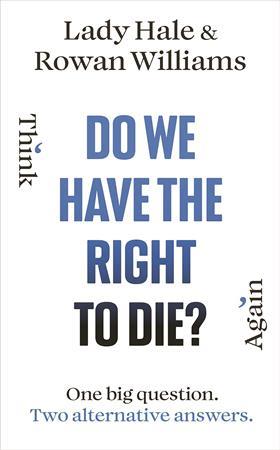
While Lady Hale and former Archbishop of Canterbury Rowan Williams’ book did not clear my head, it is nevertheless a stimulating read. As one would expect from the authors’ fair and careful analytical prose, they raise as many questions as they answer.
Lady Hale sets the scene by citing the difficult cases of Tony Nicklinson, Diane Pretty, Debbie Purdy and more. It is helpful to be reminded of these heartbreaking tales. It feels simplistic to consider that hard cases make bad law.
She writes sensitively of the disabled community and the difficulties of those with mental illness. She does not shy away from accepting that this bill falls short, mainly due to its impractical safeguards and limited eligibility. But is it better than nothing for those who believe (as she does) that we need to legalise assisted dying?
If Lady Hale does not have the answer, how can we?
Rowan Williams’ resistance to the right to die stems mainly from his position as a Christian. However, he expresses empathy for those who are suffering and their loved ones.
He looks at why this bill only considers terminal illness and not intolerable suffering. The legal argument for intolerable suffering encompasses mental as well as physical health. However, intolerable mental suffering is far outside the remit of this bill.
Williams distinguishes between ‘the right to die’ and the ‘right to choose when to die, and with medical and legal support’. He recalls that hard choices in prioritising who received care at different levels, and with what could have been perceived as various levels of compassion, were made during the Covid crisis. This illustrated just how difficult a state-supported assisted dying scheme could be in reality. Research in some jurisdictions (mainly Canada) has found that those from deprived socio-economic backgrounds are likely to choose MAID (medical assistance in dying).
He considers the use of the word ‘dignity’ – think of campaigning organisation Dignity in Dying and Dignitas – as being used only by one side of the argument. ‘Dignity’ needs to be brought back into palliative care.
Do Not Go Gentle – the case against assisted dying
Kathleen Stock
£22, The Bridge Street Press
★★★★✩
I approached Kathleen Stock’s book Do Not Go Gentle with more trepidation. It is bigger, and the author has a reputation for being a fierce advocate for causes she believes in. What is more, the book’s conclusion is again spelt out on the cover. The title refers to a poem by Dylan Thomas, who died aged 39 in 1953. The next lines of the poem are ‘Rage against the dying of the light’.
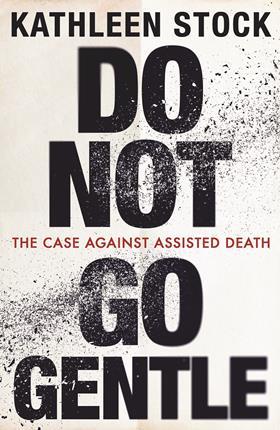
Do Not Go Gentle is a harder read. The depth of research and arguments are thought-provoking. Stock’s position is that this bill would introduce an Assisted Death Service and that this would lead our society into moral decline. She points out that it would require an amendment to the NHS Act. And that non-interference in our rights is entirely different from assisting.
I found Stock’s creation of ‘characters’, such as the Freedom Lover and the Merciful Helper, patronising and annoying. But in a book full of detailed historical and philosophical references, Stock used these characters’ stories to make her point.
All three authors write eloquently. Anyone truly interested in the subject would do well to read both books.
The common theme was that our society has limited legal, social and medical resources to satisfactorily resolve the question either way.
Melinda Giles is a partner at Fisher Jones Greenwood







No comments yet