























Contemporary Trends in Sharia: Critical Debates in Historical Contexts
Hadi Enayat and Mohamed M Keshavjee
£140, Bloomsbury
★★★★✩
This study is a timely and valuable intervention in debates that are too often marked by anxiety, simplification and political heat rather than legal understanding. At a time when references to ‘sharia’ routinely trigger moral panic in public discourse, this book offers something more useful: clarity, historical depth and intellectual restraint.
The authors’ central contribution is to insist on a distinction frequently ignored in both media and policy debates – between sharia as an ethical and moral vision, fiqh as human jurisprudence, and ‘Islamic law’ as the contingent body of rules applied by states at particular moments in history. Once that distinction is made, many of the assumptions that underpin western fears of a monolithic, binding legal system begin to unravel.
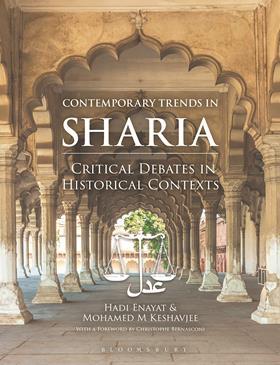
The authors consider topics such as constitutionalism, criminal justice, gender equality, human rights, bioethics, alternative dispute resolution and Islamic finance. Of particular interest are the chapters on constitutional law and criminal justice, which demonstrate that classical Islamic jurisprudence developed robust safeguards around due process, evidentiary standards and restraint in punishment. These principles sit far closer to modern rule-of-law values than is commonly assumed.
Equally valuable is the discussion of reformist and progressive Muslim study, which the authors locate firmly within Islamic legal tradition rather than presenting it as an external or western imposition. This challenges the common binary that pits ‘tradition’ against ‘modernity’ and instead frames legal reform as an internal process.
The book does not seek to romanticise sharia, nor does it offer easy recommendations. Its appeal lies precisely in its refusal of slogans, including the increasingly hollow rallying cry to ‘bring back the sharia’.
For lawyers working in increasingly plural legal environments – whether in family law, mediation, public law or international practice – this is an intelligent and useful guide to a complex legal and ethical concept.
Naureen Shariff is a partner at Blackfords LLP, London







No comments yet