


















Politicized Religion and the Reframing of Fundamental Rights
Susanna Mancini, Michel Rosenfeld
£105, Oxford University Press
★★★✩✩
In 1976, German constitutional scholar Ernst-Wolfgang Böckenförde coined the ‘Böckenförde Dictum’, which states that ‘the liberal secularised state lives by prerequisites which it cannot guarantee itself’.
Essentially, the modern western, liberal state – dedicated to individual rights such as freedom of speech, freedom of conscience, privacy and personal autonomy – can only survive if the society it governs is relatively ideologically and culturally homogenous. If social unity doesn’t arise organically – and inter-group conflict over ideologies and practices becomes significant – the state is left with a dilemma: unity can only be achieved through coercive legislation promoting the state’s own moral and ideological preferences. This undermines the ethos of a liberal state.
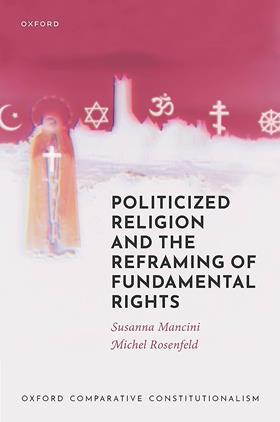
The theme of this work is the encroachment of ‘politicised religion’ into the secular world order, with what they see as negative consequences for individual rights.
The book begins with a brief but effective history of ‘secularism’ as a philosophy and concept of government. Secularism originally referred to the ordering of society rather than the ordering of the religious realm. One of my favourite Catholic terms is ‘secular priest’, meaning one who ministers to the faithful at large – usually via a parish – rather than, say, a monastery priest. It is only in relatively recent times – since the 1648 Treaty of Westphalia acknowledged religious pluralism in the Holy Roman Empire – that secularism as the religious neutrality of government has taken hold. It then analyses different forms which secularism may take.
The key section is the second half, in which the writers discuss what they perceive as the threats to secularism caused by political uses of religion. The examples chosen are primarily US-centric and much time is spent on the long campaign waged by an alliance of evangelicals and Catholics to overturn the constitutional right to abortion, identified by the US Supreme Court in Roe v Wade (1973). The writers also consider what they perceive as the increasing use of religious rhetoric in recasting the law in fields such as immigration and welfare, and philosophical-legal views on interpretation of the constitution such as ‘originalism’ and the ‘common good constitution’ of Catholic thinkers such as Robert P George and Adrian Vermeule.
Herr Böckenförde would, one suspects, nod his head in sage recognition; what the authors have identified is his dictum in action. The past decade has shown that the ‘liberal consensus’ that apparently held for most of the second half of the 20th century has begun to fracture. The cultural and ideological homogeneity on which the liberal state relies can no longer be taken for granted. The fact that the increasingly strident opposition is partly couched in religious terms is a secondary issue.
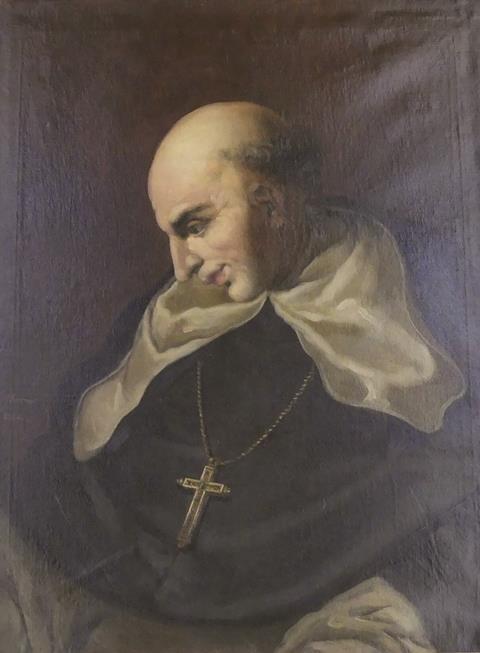
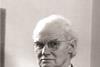
The writers also give themselves away in their choice of examples, focusing as they do on religious language used to support what are usually considered ‘populist’ or ‘right-wing’ policies. One wonders whether the writers would be similarly critical of, say, the work of Dominican Friar Bartolomé de las Casas (pictured) to force the Spanish crown to recognise the rights of the indigenous peoples of the Americas? Or evangelical William Wilberforce’s tireless work to outlaw the slave trade in Britain and her empire? The work is, essentially, a critique of populism couched in religious language rather than of the threat of religion to secularism.
It’s an interesting work for the specialist – the history of secularism as a philosophy particularly fascinated me – and the argument has merit. Despite the Enlightenment’s proclamation that human reason divorced from God is all that is required, religion keeps forcing its way into politics.
Perhaps the best approach is not to see the resurrection of religion in politics as a threat to a particular form of government, but to afford religion a place in the public space and listen to what it has to say. That, after all, is the point of democracy.
James E Hurford, solicitor, London




No comments yet