






















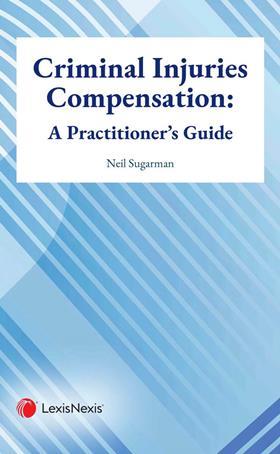
Criminal Injuries Compensation: A Practitioner’s Guide
Neil Sugarman
£180, LexisNexis
★★★★★
For personal injury solicitors, applying for an award under the Criminal Injuries Compensation Scheme (CICS) on behalf of a client will probably be a relatively rare occurrence. Unfortunately, though, the scheme is complex, and the body that administers it, the Criminal Injuries Compensation Authority (CICA), is not an easy one to deal with.
With the publication of this book, help is now at hand – from one of the best-known and respected lawyers in the field. Solicitor Neil Sugarman has distilled decades of knowledge and hands-on experience of criminal injuries compensation claims into this book. The result is a comprehensive and very user-friendly guide.
The book holds the practitioner’s hand through every step of the process, from first advice – covering issues such as eligibility, quantum and limitation – through to making an application, pushing for a review, and handling any appeal and even a judicial review. What is noticeable throughout this clearly written, accessible book is the way it is peppered with practical tips born of long experience. For example, where a claim is being made outside normal time limits, Sugarman sets out how practitioners need to provide as much evidence as possible on the reason for the delay. Claims officers will be looking for any signs of deliberate, tactical delay.
The driving force behind the book appears to be a subtle call to arms by Sugarman, who wants lawyers to push hard on behalf of their injured clients. The process and players may be new and different, but this does not mean lawyers should be approaching these claims in a style that lacks their usual rigour.
As Sugarman says in his foreword: ‘A common theme [of the book] is that [practitioners] should refuse to bow to unfamiliarity which might result in them ignoring their normal practices... [The message] is that applying under the CICS is essentially an evidence-based process, satisfying a burden of proof to the standard required by those who administer the scheme, or to an independent arbiter.
‘It is sometimes difficult to understand why those supporting applicants abandon their trained instincts, and the message from this book is to adhere to basic principles in the interests of often traumatised and very deserving individuals.’
For lawyers who are up for the fight of securing the fairest compensation they can for injured victims of crime, Sugarman’s new book is set to become the weapon of choice.
Rachel Rothwell






No comments yet