























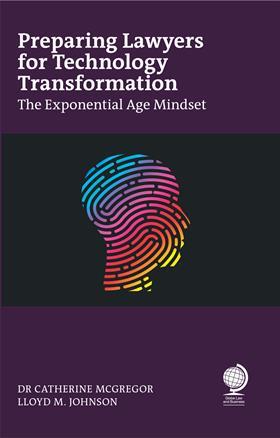
Preparing Lawyers for Technology Transformation: The Exponential Age Mindset
Catherine McGregor, Lloyd Johnson
£95, Globe Law and Business
★★★★✩
The reality that AI is destined to change (in some cases almost beyond recognition) every conceivable aspect of how legal services are presented and supplied will, or at least should, have become obvious to all those with responsibility for managing law firms. It is not a question of if. It is not a matter of when. It is already happening.
The ever-accelerating rate at which AI capabilities are improving is matched only by the levels of adoption of the services which those capabilities make possible. The hardware on which AI depends may be nearing its current physical limits (at least until quantum computing becomes a practical reality), but its ubiquity (brought about by ever-reducing costs) has resulted in AI being fed the data on which it thrives and evolves at a ferocious rate.
These are the root causes of the exponential changes which this book identifies as continually widening the gap between what is technically possible and what is ethically sound, especially within a profession which has traditionally set such great store by the principles of certainty, stability and gradual change. Until now, most firms have recruited and promoted staff and managers whose mindsets have been seen as most suited to effectively and profitably embracing those same principles. However, this erstwhile valued mindset is almost diametrically opposed to the ‘Exponential Mindset’, which this book sees as crucial for lawyers and law firm managers as they address the realities of the AI revolution.
Having established this premise in very short order, the authors proceed to set out what they regard as the nine mindsets required of law firm leaders who want to succeed in the age of AI. These mindsets are given such memorable labels as ‘The Joyful Tightrope’ (a term which defines an increased level of comfort with continual uncertainty).
Most of the second half of the book is then taken up with proposing a set of ‘Exponential Age Tools’. These will assist in bringing about the necessary change in mindset through the process of recognising and actioning the business opportunities which can arise from identified business-specific risks.
Lawyers do not like change. Most are equally averse to risk. This very readable book should give you plenty of food for thought as to what AI-related risks firms face.
Sean Gordon is a risk and compliance solicitor and former COLP and DPO









No comments yet