





















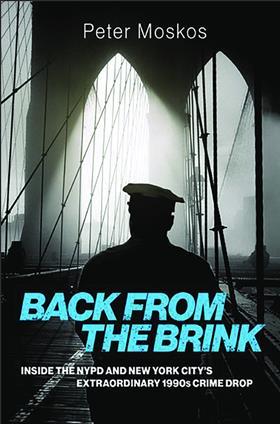
Back from the Brink: Inside the NYPD and New York City’s Extraordinary 1990s Crime Drop
Peter Moskos
£19.99, Oxford University Press
★★★★✩
New York City in the 1970s and 80s was infamous for levels of crime that appeared to be out of control. Many films were made in which the city was the backdrop to gang violence and lawlessness. Then, between 1990 and 1999, murders declined 70% and all crime numbers fell significantly. This book attempts to explain how the city bounced back. Using testimony from members of various law enforcement agencies, Peter Moskos argues that the police deserve most of the credit, together with those leaders who supported new ideas.
In 1993, Rudy Giuliani was elected mayor and he appointed Bill Bratton as NYPD commissioner. Bratton implemented a policy which was intended to restore order to every part of the city. In doing so, he adopted the rhetoric of a wartime Churchill: ‘I did not come here to lose. We will fight for every house in the city. We will fight for every street. We will fight for every borough. And we will win.’
The Broken Windows theory – that visible signs of disorder such as vandalism and minor crimes can lead to a perception of a lack of control, which in turn encourages more serious crime – was his mantra. Bratton’s strategy involved aggressively policing small infractions to maintain public order and prevent escalation to more serious offences. One contributor described this strategy as ‘the people who are doing the little things are going to be highly likely to be doing the big things … if you want to end robbery, start with fare evasion’.
The increased use of stop and search is defended as a way of gathering intelligence: ‘Stopping a guy for drinking beer gave you a chance to run him for a warrant. Is he wanted for a violent crime?’ Fears were expressed that, with the emphasis on law and order, the city might become a police state. But the police tactics were very popular and Giuliani was re-elected for a second term, though Bratton resigned in 1996.
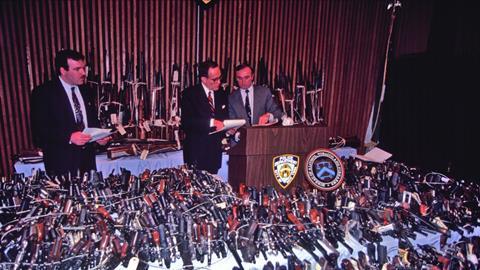
The NYPD did not have a system in which to compile and examine crime data. Deputy commissioner Jack Maple once asked: ‘How much crime did we have last week?’ Nobody knew the answer. The solution was to be CompStat. This included four core components: timely and accurate information or intelligence; rapid deployment of resources; effective tactics; and relentless follow-up and assessment. The authorities decided to target the city’s transit system and public spaces. Graffiti and begging on the subway were prohibited.
Business Improvement Districts were authorised to impose a fee on property owners within their area to provide services and promote commercial interests. Most famously, Bryant Park, considered by many to be a lost cause, was restored and reopened. The reclamation of public space, allied with a decrease in crime, fear and disorder, proved that there was a viable solution: ‘The crime drop began, arguably, with the simple belief that urban space can be policed, that public order can be maintained, and that public order, fear, and crime are intertwined.’
In The Tipping Point, Malcolm Gladwell identified the Broken Window theory as key to reducing crime in New York City. More recently, Gladwell has suggested Broken Windows was not only ineffective but counterproductive, since it stoked tensions in local communities. Bratton objects to the use of the term ‘zero tolerance’ as it suggests zealous policing with a disproportionate impact on minorities.
The author argues that many sociologists were reluctant to credit policing. This would run contrary to the accepted belief that crime rates could only decline in the long term as a result of major changes in poverty, housing, employment and education. Yet, in New York City, we are told that none of these factors changed significantly in the 1990s. Some research finds no clear link between the theory and the decline in serious crime during the 1990s. This suggests that other factors, such as population increase and more police funding, may have been more influential.
The personal testimonies of some of the 35,000 police officers in New York City are, at times, brutally honest. Moskos, a former police officer himself, tends to defend the police against criticism which may be warranted. That said, this is an important record of how the city used innovative law enforcement to turn itself around.
Kevin McVeigh is a partner at Elliotts Legal, Belfast






No comments yet