
























It might seem like the post of lord chancellor and justice secretary has become nothing more than a ministerial stepping stone for non-lawyers.
In actual fact, each of the last six holders of the role have had a background in law either as a solicitor or barrister (not counting the 49-day tenure of Brandon Lewis who served under Liz Truss and if nothing else constitutes a seriously tricky quiz question).
The likes of David Lammy, Alex Chalk and Robert Buckland have arrived at the Ministry of Justice in the past 10 years with solid legal careers behind them, and have probably been granted a little more grace from the legal profession as a result.
For non-lawyers, acceptance is a tougher challenge but not impossible. Michael Gove left after 14 months with a largely positive report card after seeming to balance the constitutional tightrope of sitting in cabinet and keeping the legal sector largely on board.
The same could not be said for the two non-lawyers that invoked the most ire during their spells as lord chancellor.
Read more
Chris Grayling remained a buzzword in the profession for incompetence and obstinacy for many years after being handed the hospital pass of trying to run the justice department during a time of budget cuts. Legal aid was taken away from several areas and court fees imposed, with Grayling constantly subject to judicial review.
Memories abound of protestors outside a summit to celebrate 800 years since Magna Carta calling for Grayling to go and creating a giant head out of papier mache.
Then shadow solicitor general Karl Turner told the rally: ‘Grayling’s incompetence is not because he doesn’t have a law degree; he is just incompetent. He has been held unlawful so many times, he ought to be in a prison rather than running the prison system.’
Grayling seemed indifferent to his role in respect of safeguarding legal aid, telling the joint committee on human rights in 2013 there were limits on how much the state could provide and adding: ‘If you look back, we have only had a legal aid system in this country for about 70 years; we have had 800 years of Magna Carta.’
If Grayling was perceived as having attacked elements of the rule of law, his later successor Liz Truss was accused of having failed to defend it.
The Daily Mail’s infamous ‘Enemies of the People’ headline was greeted with near-silence from the lord chancellor’s office, despite its clear assault on the independence of the judiciary.
Former lord chief justice Lord Thomas of Cwmgiedd said Truss had been ‘completely and utterly wrong’ to say at the time she could not criticise the media. He recalled having to ask the police to give safety advice and protection due to the emotions stirred by the headline and said he was ‘very disappointed’ in the lack of response from the lord chancellor.
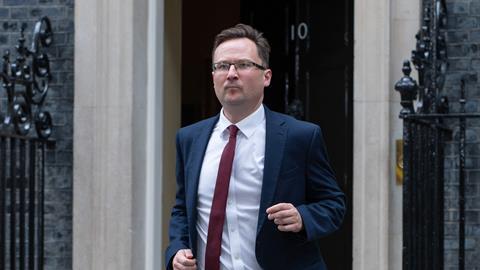
These are important lessons to take away for Alex Norris, someone with no background in the law, as he takes on the role of justice secretary and lord chancellor from this week. It will, as it usually does, look faintly ridiculous to have a non-lawyer draped in judicial finery as he is invested at the Royal Courts of Justice. But that is merely symbolic. The real challenge lies ahead in convincing the legal sector he is genuinely committed to the rule of law and administration of justice. You don’t have to be a lawyer to understand these concepts, but you have to work that much harder to prove it.













3 Readers' comments