


















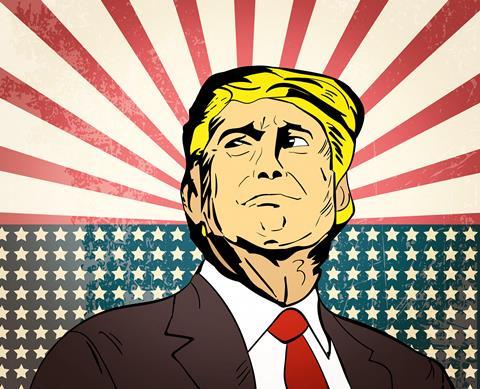
Like many others, I want to blank out the sensation of being in Donald Trump’s mind, as his every utterance blasts into our ears and eyes, churning us around like clothes in a washing machine. I switch off the news and listen to Radio 3 instead.
Having said all that, it is interesting to note that lawyers’ efforts to gain his attention last week seem to have come to nothing. A group of lawyers’ organisations, including the Law Society, organise an annual ‘Day of the Endangered Lawyer’, focused on a particular country each year where lawyers are at risk. This year, it was America’s turn, because of worrying signs in its treatment of the legal profession (dismissal from government service of those who worked legitimately on certain prosecutions, intimidation of big law firms and judges, among other trends).
There is a statement and petition outlining what has gone wrong and what needs to be put right, supported by, among others, the Law Society.
I had been looking forward to hearing from the president, as I was churned dizzyingly around and around, about how no one in world history had done more to promote the independence of the legal profession, about how lawyers who spoke against him were radical left lunatics and domestic terrorists, and how he had to own the real estate on which the courts stand to be able really to defend them.
But silence; silence about lawyers, that is. For the rest, the washing cycle was on super-spin, as we all were subject to the comments about NATO troops fighting behind the frontlines (with a later amendment in regard to our troops), Greenland, the Board of Peace, tariffs on Canada, and so on.
Maybe he didn’t hear us. Maybe he didn’t care. Just a few days before, six federal prosecutors in Minnesota resigned over the Justice Department’s push to investigate the widow of a woman killed by an ICE agent, along with the department’s reluctance to investigate the shooter himself. So I go with the idea that, even if he had heard us, he wouldn’t have cared.
Interestingly, the American Bar Association, which last year issued a statement on the Day of the Endangered Lawyer when Belarus was the country under the microscope, does not seem to have issued a statement this year – despite its sterling efforts to support the rule of law and the role of lawyers in the US over the past year.
However, the New York City Bar held an event in celebration of the day, called ‘Endangered Lawyers? Attorney Independence in the Department of Justice’. Its blurb specifically drew attention to the fact that ‘dozens of judges have called out DOJ attorneys for misstating facts and defying judicial orders’ since the start of the second Trump administration.
There was a partial list published of activities around the world in support of the day, put out by international young lawyers to encourage their members to rally around. It mentioned the Law Society’s action: an exhibition in the Law Society library, open until 20 March 2026, called ‘On the front line for justice: Exhibition on lawyers at risk’. This is the Society’s first ever exhibition on lawyers at risk, and contains personal effects, portraits and artwork.
There were other activities not on the list. For instance, a representative of the Council of Bars and Law Societies of Europe joined lawyers from the Brussels Bar and various human rights organisations in a demonstration outside the US embassy in Brussels, after which the petition was handed in to the embassy.
I don’t suppose that the leaders of the other countries which have been chosen as a focus of the Day of the Endangered Lawyer over the years have listened or responded, either: Belarus (2025), Iran (2024 and 2010), Afghanistan (2023), Colombia (2022), Azerbaijan (2021), Pakistan (2020), Turkey (2019 and 2012), Egypt (2018), China (2017), Honduras (2016), the Philippines (2015), and so on back to 2010.
The difference is that we were not forced to live inside those leaders’ heads. I don’t remember a sensation like it in my life.
There is a famous scene in The Shawshank Redemption, when Andy Dufresne breaks the rules and plays Canzonetta sull’aria from Mozart’s The Marriage of Figaro over the loudspeaker system to the whole prison, and the prisoners look up in wonder at the beauty that has broken over them.
We are all imprisoned in the churning washing machine of Trump’s mind. We can also break free. We can turn off the image and sound, put our phones under a cushion, and read fine books or listen to great music. It is such a relief.
Whether he hears us or not, we can also sing out about justice and the rule of law, because it is the right thing to do.
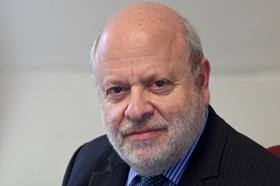
Jonathan Goldsmith is Law Society Council member for EU & International, chair of the Law Society’s Policy & Regulatory Affairs Committee and a member of its board. All views expressed are personal and are not made in his capacity as a Law Society Council member, nor on behalf of the Law Society








4 Readers' comments