























The Law Society’s new Legal Needs in Wales research offers a clear and encouraging message about the role solicitors play in communities across Wales. Where people can access legal advice, satisfaction is exceptionally high: more than 90% report a positive experience, higher than in England.
This reflects something distinctive about the Welsh legal sector, with a higher proportion of smaller firms embedded in their communities and delivering a personal service rooted in continuity, trust and local understanding.
The question, then, is not whether solicitors are trusted, but whether people can reach them. The report makes uncomfortable reading because access is becoming more uneven across Wales.
Almost one third of people with contentious issues reported some level of unmet legal need, and the most cited barrier was simply finding someone able or willing to help. The public is clear: the service is valued, but too many cannot access it when they need it.
The report also shows that this pressure is not shared evenly across the country. Mid and west Wales recorded the highest levels of unmet legal need, and people living in the most deprived areas were significantly more likely to report unmet need.
These patterns align with the growing impact of legal deserts, where provision is thinning and the practical options available to the public narrow. In rural Wales the risk is particularly acute, and our previous work shows these areas are at risk of losing up to 30% of their remaining solicitors by 2030 if current trends continue.
This matters not only for individuals seeking help, but for the sustainability of the profession itself. Wales has an older population, and the report shows a notably higher proportion of wills, trusts and probate matters than in England, underlining the continuing demand for everyday legal support across Wales.
At the same time, Wales has an ageing solicitor workforce, ageing faster than in England and most sharply in rural areas where succession planning remains limited. A 2023 SRA survey found 38% of private practice solicitors in Wales are over 50, rising to 52% in rural Wales, while fewer than 8% of rural firms have trainees.
If we are serious about access and long-term sustainability, we need a stronger pipeline of new entrants. That is why fully funded legal Level 7 apprenticeships in Wales matter.
This route has been available in England for a decade, allowing aspiring solicitors to earn while they learn and avoid significant tuition debt, while also enabling firms to recruit and train locally and build capacity over time. This is exactly what Welsh firms need.
However, young people in Wales still cannot access this opportunity because there is no dedicated Welsh Government funding. As more young people look to England for training opportunities, the Welsh pipeline is left at a structural disadvantage.
The report also points to a second pressure we need to take more seriously. People are increasingly looking online when they face legal issues, with around two thirds seeking guidance digitally and online sources used far more often than offline channels. In a country where geography can be a barrier, digital should be part of the access solution, particularly in legal desert areas.
Yet the digital offer remains weak in parts of Wales, and the reasons are practical. Many firms are owner-managed and operate without in-house IT teams or specialist support, while solicitors are doing the work, running the business and meeting compliance demands at the same time. In that context, caution about new technology, including AI, is understandable and often reflects limited capacity rather than lack of ambition.
With the Senedd election in May approaching, the choices made in the next term will matter. The next Welsh Government will inherit these consequences and will need to be prepared to back the practical measures the report points to: sustaining local firms, strengthening the workforce pipeline and supporting modernisation where it is most needed.
This is exactly the kind of challenge we explored in Reimagining Justice in Wales 2030, and why our manifesto asks for the next Welsh Government focus on practical levers that can make the biggest difference, including creating a Department of Justice within the Welsh Government and introducing fully funded legal Level 7 apprenticeships.
The central message of Legal Needs in Wales is clear. The Welsh legal profession continues to deliver trusted, high-quality advice but it’s crucial that we ensure the legal profession is equipped to meet demand in every community in Wales.
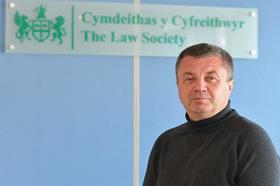
Jonathan Davies is head of Wales at the Law Society









No comments yet