



















Fifty years ago this summer, a slim youth with shoulder-length hair disembarked from a Channel ferry at Ostend, made his way to a motorway slip road and stuck out his thumb. The young man was me, hitch-hiking to a land of opportunity: the Kingdom of Iran.
I'd visited Tehran the previous year - it was where I had run out of money on the old hippie trail to India. This time, I was going to work, thanks to a family friend who wangled me a job on an English language daily newspaper.
After a couple of weeks of adventures, I made it. Within a month I was editing the home news pages of the Tehran Journal; within six months its feature pages. Preposterously - I know nothing of sport - I even had a stint running the back page.
For someone whose previous journalistic experience was covering drink-driving cases in Guildford Magistrates Court, it was quite a learning curve. The more so as our printers understood no English, faithfully typesetting in hot metal anything we sent down. The Shah's censorship, imposed by a Ministry of Information goon, was blatant but erratic. The smell of a printing press still catapults me back to the blazing three-sided rows we would have in the small hours in a mixture of English and Persian obscenities as the presses waited to roll.
As for the journalism we turned out, there was little to be proud of and several outright fiascoes: the most memorable being the night the printers mixed up photographs of the film star Raquel Welch and the wife of the Soviet ambassador to Iran. Certainly our readers would have learned little about discontent with the regime. The only hints came in goverrnment statements about 'Islamic Marxists' turning themselves in at police stations, invariably surrendering a pistol and hand grenade. On the day when three US servicemen were gunned down in the street - a story which lead the world's press - we had to fight to be allowed a mention on page three.
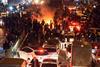
Almost as farcical was the afternoon when a doddery old reporter (he must have been all of 40) apologised for being unable to go on his rounds because of a big fire in the bazaar. 'That's the bloody story!’, I screamed, as news editors have done since the Venerable Bede first sharpened his quill. But the reporter was right and I was wrong - there was no way we were going to be allowed to cover unrest as South Tehran's anger boiled over.
After a year I'd had enough and moved to the Arab world. Tehran, though, remained a cosmopolitan haven from the Gulf, with freely available alcohol and shops stocking pirated punk rock tapes. But on my visits I detected a new sense of menace - crowds of men standing around loudspeakers relaying a harsh voice which I learned was that of the exiled ayatollah.
When the revolution came, I was back in London, still writing for Middle Eastern publications. I cheered. For a brief few weeks in early 1979 we dreamed of a Tehran spring. It took a few years for the horrors of the new regime to change my mind.
I haven't been back to Iran for four decades. I haven’t even applied for a visa since a brief thaw in relations in 2015; my last view of the country was from over the Iraqi border on a visit to Halabja, the Kurdish village wiped out by Saddam Hussein’s weapons of mass destruction.
But bits of the country stuck with me. I kept up with the output of Iran’s brilliant dissident film-makers. I still cook rice the Persian way, though it hardly ever turns out right. And at the Gazette, it has been a privilege to report from a distance on the brave opposition within the country, especially from lawyers standing up for women’s rights.
When the latest wave of protests broke out, I started daring to hope. I even dug out my battered old Persian grammar, from which after the newspaper went to press I made painfully slow progress in the all-night coffee shop of the Tehran Tower Hotel.
Finally, and here I may part company with many readers and quite possibly my employer, I joined the rejoicing at Khamenei’s death.
As to what happens next, I’ve nothing to say beyond wishing I could trust President Trump more than I do.
But here’s an assessment from solicitor Cyrus Mansouri of the British Iranian Lawyers Association. 'We are closely monitoring the current situation in Iran and are concerned for the welfare of hundreds of thousands of people currently detained, often in extra-judicial circumstances and makeshift detention centers, for peacefully expressing their political views. Recent reports indicate that prison staff have abandoned their posts, leaving prisoners without access to basic needs including food and water. Among the detained are many lawyers whose only crime was defending those accused of opposing the government.
'In January 2026, government-affiliated forces killed over 36,000 protesters across multiple Iranian cities over two nights. We look forward to a swift and, as far as possible peaceful transition to a democratically elected government where basic human rights and expectations are adhered to.'
So do I.
On Thursdays, the newspaper's day off, we would sometimes head to the Alborz mountains and, high above Tehran's heat, dust and noise, drink glasses of piping hot sweet tea next to a mountain stream. Maybe I'll do that again, one day.
Michael Cross is the Gazette’s news editor. He has worked in more than 50 countries on seven continents










6 Readers' comments