























Gazette readers would think it odd these days if we devoted a page to reviewing the latest two sports models from Porsche. But in October 1986, a page on the 924S versus the 944 seemed to catch the national mood.
Yes it is 40 years since Big Bang - a range of deregulation measures driven by Margaret Thatcher’s second Conservative administration created today's City: a phenomenon which has almost entirely parted company from the rest of the national economy.
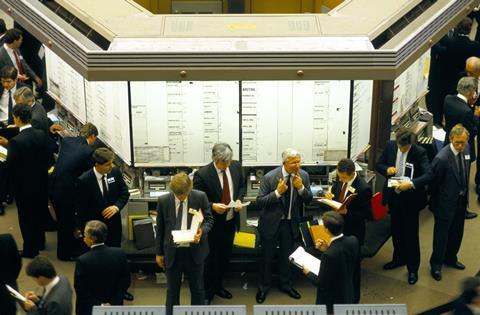
The measures that took effect on 27 October 1986 were apparently arcane changes to the London Stock Exchange’s rules. The exchange abolished minimum fixed commissions on trades, ended the separation between stockbrokers and jobbers the (overwhelmingly) men who actually traded, and allowed foreign firms to own UK brokers.
Thatcher’s chancellor of the exchequer, Nigel Lawson, saw changes as mainly technical. His major preoccupation at the time was sterling's slide against the German currency: it fell to less than three deutschmarks for the first time. 'With hindsight,' he admitted in his leaden memoir The View from Number 11, 'I underestimated the demand effect that financial deregulation... was to have'.
But the October 1986 reforms were the culmination of a much larger scheme, which began with the 1979 ending of restrictions on lending by building societies and the abolition of exchange controls. (Which, if my memory serves me, involved notifying the Bank of England each time you threatened to take more than £25 in cash out of the country.) Meanwhile the gentleman's culture of the old stock exchange was dented in 1982 when the London International Financial Futures Exchange opened for trading futures in sterling, gilts, Eurodollar instruments and currencies. Its barrow-boy floor traders in their coloured blazers - brilliantly portrayed in Caryl Churchill's Zeitgeisty play Serious Money came to symbolise the new City.
The new world also had its impact on the law. Early indicators of the times appeared in the Gazette's advertising pages. On 17 September, Smith New Court plc, ‘the largest independent jobber on the London Stock Exchange’ advertised for a high quality commercial lawyer, saying ‘its activities are now broadening considerably within the context of the new regulatory environment for the securities industry.’ (The venerable firm was acquired by Merrill Lynch in 1995.) Financial services giant Heron International took out a pull page looking for an experienced corporate lawyer with seven to 10 years’ experience, salary £35-£40,000 - three times the pay offered by the new Crown Prosecution Service.
An even bigger indicator was a double-page spread asking: ‘Are you ready for the biggest flotation in financial history?’. It was from British Gas, which reminded solicitors ‘If your clients buy through you, it is likely you will be eligible to receive commission.’
On 12 November, a column entitled Big Bang and the Law observed that one of the many side-effects was that competition for expertise has become intense. 'The big new players in the securities industry have spent huge sums on acquiring city institutions - only Cazenove of the major stockbroking firms now remains independent. Is there any reason why the trend (of transfers of teams) should not spread to professional firms themselves?'
'There seems no reason why in principle an aggressive expansion-minded professional firm should not seek the quick route to a new area of specialization,’ predicted Jonathan M Lewis, senior partner in DJ Freeman & Co, London.
Even so, the City and the profession were surprised when in February 1987 The Independent reported ‘Two of the City’s biggest legal firms to merge.’ The merger that created Clifford Chance launched a trend which continues to this day. Few people at the time would have predicted this particular boom: a 1984 Conservative thinktank pamphlet No End of Jobs, full of upbeat predictions about the opportunities generated by the micrcochip, fails to mention legal services at all.
As for regulation of the new City, in December the Gazette reported that the Financial Services Act 1986 had received Royal Assent. Its distinctly light touch regime involved a Securities and Investments Board presiding over various new self-regulating organisations. However the act did create a new criminal offence of market manipulation 'If the spectre of insider dealing in this country seems depressing, what can one say except - think of Wall Street,’ observed the Gazette's City columnist.
For City journalists, it was a heady time. As a junior reporter on a new daily newspaper - whose launch in the same month was very much part of the brave new world - I spent Big Bang day attempting to find out about the computer problems hitting the new trading floors. Little did we know what the IT revolution would do to our own business model.
Certainly I never got to own a Porsche. The Gazette motoring correspondent’s verdict, by the way, was: ‘I found both the 924S and the 944 highly polished performers with comfort to match.’
Michael Cross is Gazette news editor












No comments yet