
























Entrepreneurial lawyers are increasingly drawn to consultant model firms – a striking departure from traditional partnership and hourly billing. Instead, they benefit from autonomy over both their working practices and earnings, reports Joanna Goodman
The Codex Edge Platform Firms Report 2025 tracks the growth of consultant model firms. These employ some 4,000 lawyers and are an increasingly popular alternative to traditional partnership or a corporate ABS (alternative business structure) for experienced lawyers. LexisNexis projects further rapid growth.
Consultant firms are structured in a similar way to barristers’ chambers, with lawyers working independently under an umbrella organisation. They range in size from larger firms with around 500 lawyers to specialist boutiques. Lawyers are typically self-employed and generally retain around 70% of their fees. The rest goes to a central organisation that provides business overheads, including office space, tech, insurance, regulatory compliance, admin and other support services. Hybrid models include consultant lawyers, salaried lawyers (who are typically more junior), staff and even trainees.
The consultant model is a flatter structure without the typical partnership hierarchy and hourly billing targets. There is no formal career progression, and lawyers are responsible for building and managing their own practices.
'A big element of our evolution is to listen to our lawyers to find out what makes them tick'
George Bisnought, Excello Law
Consultant firms are growing in number and headcount. Their market differentiation is culture as well as structure. Having worked in a traditional partnership and subsequently as a corporate lawyer, Excello Law founder and chief executive George Bisnought had experienced both sides of the profession. As a lawyer, he found the inflexibility of law firm working practices, glass ceilings and reward systems frustrating, and from a client perspective, he identified issues around accessibility, quality and cost. He established Excello Law in 2009 to address those concerns and give lawyers the right tools and support to help them flourish. In 2025, with about 270 lawyers worldwide and turnover of £30.5m in 2025, it is in the UK’s top 200 firms by revenue.
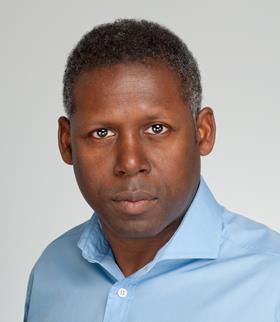
Bisnought’s priority was integrity. This involved having honest conversations with lawyers, and providing an infrastructure – tech, regulatory compliance, secretarial support and so on – that was sufficiently agile to become a platform for innovation. ‘A big element of our evolution is to listen to our lawyers to find out what makes them tick and how we can best help them develop,’ says Bisnought.
While Excello started as a virtual law firm, it currently has nine UK offices and three international offices. Focusing on the lawyer and client experience, while replacing the traditional hierarchy with a level playing field, produced a very different culture. This at least in part accounts for a lawyer retention rate of around 98%.
Bisnought highlights the value consultant lawyers place on longstanding client relationships. ‘Bugbears for lawyers in [traditional] law firms include not being allowed to work for particular clients, and having no control over their hourly rate. And billing targets create wrong behaviours. Clients benefit from our model having no targets because lawyers can have an open and honest conversation with their clients about their value proposition, and while the majority of our matters are fixed fee, there is no central diktat around billing.’
Taylor Rose employs more than 500 consultant lawyers and is growing year on year. The AIIC Group, the company behind Taylor Rose, FDR Law and Kingsley Wood, has registered a five-fold increase in consultant solicitors since 2020. While FDR Law and Kingsley Wood operate solely under the consultancy model, Taylor Rose also employs salaried lawyers. This hybrid model evolved due to a combination of business relationships and acquisitions, notably the purchase of McMillan Williams from administration in 2020, creating a UK top-75 consumer law firm.
‘Law firms out of the box’
Consultant model firms are expanding in innovative directions. In 2018 Excello Law launched its House of Brands, a collection of specialist law firms that operate on the Excello platform. These subsidiary brands market their own labels under the Excello umbrella, in the same way as department stores have ‘own brand’ products. As Excello founder and chief executive George Bisnought explains, participating firms, which tend to specialise, for example in sport or intellectual property, are looking to focus on what is important to them without the burdensome aspects of running a business. ‘They want support with recruitment, payroll, compliance, I used to call it a law firm out of the box,’ he adds. Occasionally, branded firms grow out of the platform and spin out to operate independently. There are currently 14 law firms in Excello’s House of Brands, eight of which were founded in 2025.
Hybrid firm Taylor Rose also offers the possibility of running a ‘law firm pod’, whereby consultants recruit and run their own teams under the Taylor Rose brand. Partner and consultant conveyancer Sophie Durkin has built a conveyancing team of 40 lawyers and support staff, operating across several UK regions. These consultant-led pods provide a career structure for consultant lawyers looking to move into management, and junior lawyers who can join as sub-consultants and develop their practices as part of a specialist team. Durkin was a consultant lawyer before recruiting her team from the network she had built up as a conveyancer.
Some of Merali Beedle’s consultant lawyers take on trainees, who can pitch internally for work with different teams to gain experience in multiple practice areas as well as networking and business development. Carbon Law Partners’ Carbon Academy enables trainees and solicitor apprentices to gain qualifying work experience supporting consultant lawyers.
The consultant model is ideal for international expansion too, as locally based consultant lawyers are a fast and flexible way of establishing a presence in other markets. Merali Beedle has just opened an office in Dubai. Excello Law has a presence in Dubai (pictured) and Belfast, and is currently expanding its US business in California.
Adrian Jaggard, CEO at AIIC Group and Taylor Rose, founded Taylor Rose with his brother as a traditional partnership in 2009. It converted to an ABS in 2015. The consultant side of the business started with a transactional relationship with a foreign-qualified lawyer who needed a UK host firm. This worked so well that they decided to make it a defining part of the business and a catalyst for growth. Currently, two-thirds of the firm’s lawyers are consultant lawyers.
Recruiting the right people is a critical success factor for consultant model firms. ‘After 17 years, we have developed a good sense of whether a particular lawyer is going to fit in, and that is assessed at interview stage,’ explains Excello’s Bisnought. ‘All our lawyers are approved by our insurer before we make an offer. They then go through an induction process, which is about understanding how each lawyer likes to work, and their expectations around IT and secretarial support. We have a financial adviser who can help with the transition from being employed to being self-employed, and a head of culture and wellbeing.’

He says that ‘new joiners are offered introductions to consultants in other relevant specialisms. For example, a corporate lawyer might collaborate with employment, tax or real estate colleagues.
‘Our platform provides lawyers with a launchpad for whatever they want to do as an entrepreneur within Excello,’ adds Bisnought, ‘whether it is operating as a consultant, working in a team, or creating their own brand, under our House of Brands model.’ This is a unique facility whereby independently branded firms operate under the Excello umbrella.
As well as providing consultants with marketing and profile-raising support, Excello offers multiple opportunities for networking and collaboration across the business, with virtual coffees, practice group meetings and networks, as well as in-person events and an annual conference.
'We have a framework that facilitates and rewards internal referrals'
Adrian Jaggard, Taylor Rose
Taylor Rose’s network of offices with employed lawyers and staff provides its consultant lawyers with a solid workplace structure and open culture. ‘The fact that we are growing so quickly can be a challenge, so we communicate a lot and make sure that our strategy is known across the business,’ explains Jaggard, underlining the importance of recruiting lawyers who are aligned with the firm’s style and culture.
‘It’s about choosing the people we work with and projecting our [market] position and our strategy so that we attract people who are a good fit,’ he says, adding that there is no obvious distinction between employed and consultant lawyers. ‘In any of our offices, we can see consultants and employees collaborating on work and referring cases to each other.’
Jaggard acknowledges that the consultancy model works best for experienced, self-reliant lawyers who are comfortable bringing in work. It follows that 60% of AIIC’s consultants are experienced professionals over the age of 40. ‘Typically, lawyers who move into consultancy are in the second half of their career, and if they are a conveyancer, for example, they will already have longstanding relationships with local referrers. So while we do refer work to our consultants, and consultants refer work to each other, the model is based on a greater degree of self-reliance,’ he explains. ‘We have a framework that facilitates and rewards internal referrals, helping to develop trusted relationships across the business.’
Business within a business
Sophie Durkin leads a 40-strong conveyancing practice within Taylor Rose. Although she has an office in York, Durkin and her team work with financial advisers and estate agents in multiple locations around the country. While her team is effectively a firm within a firm, Durkin appreciates that the Taylor Rose framework ‘gives you time to chase referrals and manage the business’.

Referrals are an important source of work. ‘When I moved [into consultancy], I had a loyal client base who followed me. Now I have seven local agents, one in London and one in Scotland. If I am working on a file that was referred by a mortgage broker, I will ask the agent if they would be interested in working with me again. You have to put yourself out there.’
The same applies to her team, and she acknowledges that consultancy is not for everyone. Her team of consultant and sub-consultant lawyers are recruited from her network of former colleagues and business contacts.
Quality checks
Building the right teams for commercial transactions is a key component of corporate and real estate boutique Merali Beedle’s competitive edge. Co-founder Adam Merali opted for the consultancy model because it enables the firm to grow without compromising on quality. Like larger consultant firms, Merali Beedle has a very high retention rate. Merali explains that it has taken 12 years to grow the firm to 105 lawyers because recruitment is highly selective. Ideally, consultants have at least 10 years’ PQE (post-qualification experience) and are mostly recruited from City firms. ‘We allow people to play to their strengths rather than get bogged down with red tape,’ he adds.
This approach has shaped a high-performing collegiate culture. ‘We make it clear from the outset what type of people we are looking for and a lot of synergies are immediately identifiable,’ explains Merali.
There is a strong focus on quality control, which also drives collaboration. ‘Our client base is high-net-worth individuals, and we share opportunities with new joiners to get them up and running. Consultants tend to collaborate, particularly on corporate real estate deals, and pull a team together.’
Merali notes that ‘on deals with a transactional value over £5m, we expect a second pair of eyes on the case, which is a good way to introduce people and encourage them to work together. To maintain quality, we also do quarterly file checks’.
Commercial advantage
The consultant model offers competitive prices and shorter lines of communication between clients and lawyers, which is a commercial advantage. ‘Traditional law firms might have a partner in charge of business development, but at Merali Beedle, the consultant who wins the work does the work, so the client can easily get an update on their matter. This tailored service resonates with clients and gets us referrals and recommendations,’ says Merali.
Employment law is another practice area where clients appreciate short lines of communication and having one senior lawyer manage their case. Former City lawyer Florence Brocklesby founded employment boutique Bellevue Law in 2014 to provide the flexibility that she needed to maintain an acceptable work-life balance without compromising on the quality of work she was doing. As the business grew, she realised that her circle included a huge pool of talented, experienced lawyers who wanted to run their practices around their family responsibilities. While remote working has become generally acceptable, she observes that ‘flexibility is not just about working from home two days a week. It’s also about the shape of your working day, the kind of work you are taking on, and being able to set boundaries around your working practices’.

Employment law is an ideal practice for consultant lawyers, but when lawyers join from City firms, they tend not to bring their clients with them. ‘It doesn’t take long to build up a practice, but not having clients is a barrier to self-employment,’ says Brocklesby, adding that the firm attracts enough referrals to help new joiners get started.
Bellevue Law maintains its positive workplace culture and team spirit through careful hiring and hybrid working. ‘I try to recreate things that happen organically in an office environment,’ says Brocklesby. ‘While working in the office is optional, we have a head of legal practice who organises training sessions, lunches with barristers and other social events that foster collaboration and mutual support. She also does file reviews and checks standards and compliance.’
Brocklesby only hires senior lawyers. Bellevue’s 30-strong team includes 20 partner-level consultants, with an average of 20 years’ PQE. The firm’s strong culture and values – Bellevue Law is a B Corp – help to attract like-minded people. ‘It’s easier to hire people who care about being part of a team and providing a positive and consistent service,’ says Brocklesby. The firm’s practice manual sets out service standards in terms of pricing, responsiveness and client care. Importantly, consultant lawyers do not have to choose between flexibility and earnings. ‘The percentage of fees that consultant lawyers get is higher than they would get in a traditional law firm, and because we do not charge the same rates as City firms, it’s a good deal for the clients too.’

Brand values
The Codex Edge report identifies Carbon Law Partners as the fastest-growing mid-size consultant firm in 2024 with 56.52% compound annual growth rate (CAGR). Founder and CEO Michael Burne puts this down to sticking with his original mission statement ‘to create and develop the conditions for exceptional people to flourish’. He explains that ‘every new joiner gets 90 minutes with me on culture and an invitation to help us shape it’.

Carbon Law Partners operates a hybrid model and all senior lawyers, consultant and salaried, are known as partners. The firm is sharply focused on branding and defines its culture in a list of seven qualities, known as 7Q. Burne explains: ‘When we choose lawyers to join us, we are looking for these seven qualities: be client obsessed; have entrepreneurial spirit; be collaborative and trustworthy; deliver results; have strong commercial acumen; insist on the highest standards; and have a true passion for learning.’ He adds that these qualities are applied to everyone in the firm, including suppliers, and are used to audit client files to maintain consistent service standards.
Carbon operates a client ownership system for fees and team collaboration. If a consultant wins the work and does the work, they get 70% of the fee. If a matter requires several disciplines, the client owner is responsible for managing the fee allocation. Like Bisnought at Excello, the lawyer onboarding process includes getting to know a new joiner’s practice and introducing them to relevant colleagues. There are quarterly partner meetings and sector groups.
'Every new joiner gets 90 minutes with me on culture and an invitation to help us shape it'
Michael Burne, Carbon Law Partners
Burne believes that more lawyers are joining consultant firms because the profession is becoming more entrepreneurial – but only up to a point. ‘They are turning their backs on more traditional structures of career progression, hierarchy and constraint around the way that things are done, and they’re seeking what I would call qualified freedom,’ he says.
‘They need a certain amount of infrastructure, so the real differentiators are the economic model and a culture that creates a sense of belonging.’ To succeed as a consultant lawyer, you need an entrepreneurial spirit and the ability to build relationships.
Consultant firms are not just winning the talent, they are retaining it too. This indicates that the model is a good fit for established professionals who enjoy autonomy over their working lives and their earnings, without having to deal with the administrative, financial, insurance and compliance burdens involved in running a regulated law firm. Previously, some of these professionals would have considered setting up as sole practitioners, or establishing an independent high-street or boutique firm.
Jaggard at Taylor Rose sees the expansion of the consultant model as widening the legal market rather than dividing it – providing more options for lawyers and their clients. There is room for everyone.








No comments yet