






















A partner at a renowned defamation firm accused of sending correspondence containing an improper threat of litigation has applied to have the tribunal case against her dismissed.
Carter-Ruck partner Claire Frances Gill, admitted in 1996, is alleged to have sent or arranged to have sent, the 'improper threat' in 2017. At the time, Carter-Ruck was acting for now-disappeared 'crypto queen' Dr Ruja Ignatova, whose OneCoin cryptocurrency scheme turned out to be a Ponzi-style fraud.
Gill, who brought a summary dismissal application, denies the allegation in full.
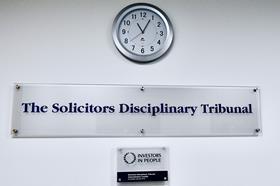
At a hearing before the Solicitors Disciplinary Tribunal yesterday, Justin Rushbrooke KC, for Gill, said the Solicitors Regulation Authority’s case that Gill ‘owed a duty to investigate the facts and even to ascertain the truth before advancing a factual case her client had instructed her to do’ was a ‘proposition [that] is clearly unknown to the law and bad law’.
He told the three-person panel Gill was entitled and 'bound to protect' her client on the basis that she had received correct instructions and the allegations made against her client at the time were false.
Rushbrooke said: ‘It is not suggested that Miss Gill did not have instructions that her client refuted all the allegations. She cannot be professionally responsible for any falsity in those instructions.’
Read more
Also for Gill, Richard Coleman KC said: ‘It is not the function of the tribunal to discover new categories of regulatory offence of which the profession is not previously aware.’
In written submissions, Gill’s representatives, who also included Fountain Court's Samuel Burns, argued the SRA’s case against Gill ‘when properly analysed can be seen as a doomed attempt to reintroduce the concept of a “duty of due diligence”’. The SRA 'would have to establish a radical new regulatory liability on the part of defamation solicitors', the submission stated. ‘The legal and practical effect would be that the solicitor could not act on the basis of his client’s instructions ... but would have to conduct inquiries (or “due diligence” as the SRA has termed it) to satisfy himself that the client’s claim for defamation will succeed.
'That would involve setting himself up as judge of his own client’s case, or a pre-trial screen, an idea that runs contrary to fundamental principles of law that govern the constitutional role of lawyers in the legal system.’
David Price, for the SRA, said: ‘The SRA stance is there is a simple answer to this application which is that the six factual elements of the SRA’s case could at least be found to be true by a reasonable tribunal at a substantive hearing and that the four legal or regulatory propositions are at least properly arguable.’
In written submissions he said Gill’s application was a ‘distraction because it is not properly directed to the narrow factual basis on which the SRA alleged that the letter was improper’.
He added: ‘The SRA’s case is firmly grounded in the purpose of the threatened litigation: to send the false message. The motive for sending the message was to persuade members and others to continue to invest in OneCoin. This motive is relied on in relation to seriousness. However, the SRA’s case stands or falls on the impropriety of the purpose.’
Speaking before the tribunal, he said the tribunal had not been properly directed to the SRA’s ‘narrow case’ which ‘establishes a solicitor should not lend his or her assistance to proceedings which are an abuse of the process of the court’. He added: ‘The SRA’s case is based on the ordinary meaning of the respondent’s own words, that is what this case is based on.'
The hearing continues. The panel is expected to make a decision later today (12 December).