























4:15pm: The master of the rolls cuts off Coleman mid-submission to bring the second day's proceedings to a close. The hearing resumes at 10.30am tomorrow. John Hyde will be back (hooray!) to give you live updates so I shall love you and leave you here. If you've been following today's blog, I hope the submissions I managed to capture/understand made sense. Thank you for reading.
4:05pm: Sir Geoffrey Vos likes his 'holiday' argument so much he's using it again. 'A solicitor goes on holiday, takes a sabbatical for one year, "I don't want to know anything about the business, I'm going on a lecture tour in New Zealand. I will be back in a year and hopefully there will be a lot of money in my account when I get back." The solicitor delegating to the managing clerk would violate the Legal Services Act because that solicitor is no longer taking responsibility in any meaningful sense and might be committing a criminal offence. 'But that's a far cry from taking a holiday for two weeks in Eastbourne and not particularly wanting to take calls and allowing the clerk to deal with issues.'
4pm: Lengthy discussion about legal responsibility, delegation and that phrase that's going to haunt me in my dreams tonight, 'carrying on'. Lord Justice Birss says that if 'carrying on' includes legal responsibility, an unauthorised person can do lots of tasks, but they don't have legal responsibility. Coleman says issue of 'carrying on' is a factual question of who in substance is carrying on the activity.
Lady Justice Andrews says it boils down to who can manage someone. Carrying on implies some kind of personal responsibility. Not good enough to say "I'm handing all of these files to you and I'm not taking any interest in it." But in the majority of cases, that's not what's going on. Delegation of responsibility will be to properly accountable people for whom the supervising person will have legal responsibility for or de facto responsible for checking them from time to time.' Where Lady Justice Andrews takes issue with Coleman's argument is that, that can't be done by sampling.
3:50pm: Coleman says CILEX's interpretation is contrary to the purpose of the Legal Services Act. Those carrying out activities are fit and proper persons. The right to carry on a reserved legal activity is by its nature a personal right. If the performance of a reserved legal activity can be delegated in the wholesale way suggested, parliament would have made that clear.
3:44pm: Coleman says that if parliament had intended an authorised person could wholly delegate to an unauthorised person, it would have been in the reserved activities exemption. It's not an obvious error. It cannot be treated as an error or oversight.
3:41pm: Coleman now discussing the reserved activities exemption. Vos says the judges need to understand a bit more about probate and conveyancing activities before they start to draw general conclusions from the legislative provisions. The judges will want to hear more about those tomorrow.
3:37pm: Coleman talks about 'appropriate direction and control'. Vos wants to know where that comes from in the act. 'Appropriate direction is about regulation. What's appropriate is a matter of regulation. Where do words about supervision and appropriate direction or control actually come from? They do not come out of the words 'carrying on'. Coleman says they come from the natural meaning of the words ('carrying on', I think) and from the policy objectives of the act.
3:34pm: I've found my way back into the discussion again. They're talking about exemptions. Coleman says an unauthorised person can assist with the conduct of litigation. What they can't do is direct or control.
3:20pm: I've got slightly lost in the discussion that the judges are currently having with Coleman, but another fun fact: before he joined the bar, Lord Justice Birss did work for a law firm of solicitors in the summer of 1989.
3:11pm: Coleman says Law Society takes a neutral position on Baxter.
3pm: Coleman looking at the meaning of 'to carry on'. If it's been a while since you read the Legal Services Act, here's part 3, all about reserved legal activities, which Coleman is currently going through. Fun fact (my words, not Coleman's): there are 6 approved regulators in relation to the conduct of litigation. Prior to 1999, there was only one: the Law Society.
2:54pm: Coleman now taking the court on a 'Cook's tour' of the relevant provisions in the act. Not gonna lie, had to look it up. The internet tells me it's the name of a travel and food show. It also means a 'rapid or cursory survey or review'.
2:40pm: Vos seems to have issues with a particular line of argument that Coleman is putting forward. The purpose of the legislation, the master of the rolls says, was to unblock the monopoly of solicitors and barristers. Vos says Coleman's response to a question from Lord Justice Birss is that it's not acceptable as a matter of law and the risk of committing a criminal offence, for a solicitor to supervise someone not authorised by checking only a sample of their files. And it's not on for a solicitor to go on holiday and leave someone unauthorised in charge of the office even if they take full responsibility of the files in question. 'That's your submission? I'm not questioning your submission but I'm questioning whether that can really be the position of the Law Society.'
2:30pm: Coleman says a right generally can't be delegated. While appropriate delegation of tasks is permitted, there may well come a point, particularly wholesale delegation where a solicitor goes away for 6 weeks, nothwithstanding the solicitor's legal responsibility as a matter of fact, it's the unauthorised person who is carrying on the conduct of litigation.
Coleman gives an illustrative example of the way this works: the decision to commence legal proceedings is a reserved legal activity. It requires the exercise of professional skills, judgement by an authorised individual. It cannot be wholly delegated to unauthorised staff consistent with the act. Whether to commence proceedings at all, what court to issue proceedings in, what to include in the claim form, are matters of skill and judgement. An unqualified individual may assist an authorised person with these matters. They might consider the relevant substantive and procedural law for the authorised person to further consider. They might sign the claim form at the direction of the authorised person. They may do the electronic filing on the instruction of the authorised individual. But the authorised individual must be satisfied that the work is in accordance with the applicable and legal standards.
2:24pm: Master of the rolls Sir Geoffrey Vos questioning why we need to look at every case, case by case. 'There will be thousands where solicitors delegated things to unauthorised persons'. One-person firms 'will never go on holiday again. That's it'.
2:17pm: Coleman making submissions on the meaning of 'to carry on'.
2:01pm: All risen for the judges. Richard Coleman KC now on his feet, beginning submissions on behalf of the Law Society. His oral submissions will be in three parts: core submissions on the proper interpretation of the phrase 'to carry on an activity which is a reserved legal activity'; first point supplemented with a 'cook's tour' (at least that's what I think he said) of the relevant provisions of the Legal Services Act; reply to the key points made by CILEX. Here's an article by John Hyde (back tomorrow, I promise!) on what the Law Society and Solicitors Regulation Authority will be arguing.
1:55pm: We're back! People scrambling for seats. Looks like some people are heading to the overflow court in court 63.
1pm: Court adjourned for lunch. Back at 2pm.
12:59pm: Kirby now on the 'need for clarity' point. 'There is an overwhelming concern for law centres. They need to know where they stand. We urge this court to allow CILEX's appeal. But in any event, we ask for the clearest guidance so law centres can reassess their supervisory requirements and work out how they can, in their limited budget, provide services.'
12:40pm: Kirby now on delegation and supervision. Says under the law centre delegation model, which has been around for years, each centre will have their own ratio of authorised and non-authorised personnel. For instance, one solicitor to five caseworkers. Caseworker will have to do a certain number of hours of work. Law centres only have 3% of legal aid contracts but something like 43% of welfare benefits work. You're not going to be able to run a firm of solicitors dealing with welfare benefits work.
12:35pm: Kirby points out that law centres provide services under the Housing Loss Prevention Advice Service. For some, it will be solicitors providing the service in the county court for people facing eviction. For some, it will be caseworkers. The concern, in light of Mazur, is whether the help provided can amount to conduct of litigation. Mazur will have an impact on ordinary people, some who will lose their home.
12:30pm: Kirby on access to justice: 'Law centres provide access to justice to some of the most disadvantaged in society. People who cannot afford to pay solicitors' fees. The one-hour guideline hourly rate will exceed their weekly income. When considering the Legal Services Act, one of the objectives set out in section 1, is to provide and improve access to justice. [Mazur] has already had a significant impact on the way law centres can provide their services. They have been unable to provide the width of services they would normally provide. Post-Mazur, law centres have had to err on the side of caution. One law centre has lost experienced staff. They have reduced the services available.'
12:25pm: PJ Kirby KC now on his feet, appearing for the Law Centres Network. His submissions will cover: access to justice; delegation and supervision, particularly in the law centres model; section 23; decision of Khan v SRA; and need for clarity.
12:19pm: Williams says Baxter is a false turn in the law. Possible it's right in its outcome but it should be overruled in the analysis. Williams then moved onto ground 3, which he calls the 'extreme unction point'. Williams says if it's found that Mazur and Baxter are right, 'an entire generation of cases' will have been conducted unlawfully. Williams says it is open to the court to regularise the position by granting the right to conduct litigation itself. No reason why such a right, in appropriate circumstances, should not be granted retrospectively.
12:05pm: Williams still on Baxter. Says Mr Justice Cavanagh misreads the Legal Services Act, which affects his analysis. Williams talking about how the judge deals with Agassi and it is the tennis player!
11:51am: We're now on APIL ground 2 - Baxter. Williams says it was wrong on the expansion of the conduct of litigation. Mazur and Baxter 'risks the perfect storm'.
11:42am The TV screen just spoke! 'Waiting for the conference host to join. If you are the conferende host, please enter the pin number now.' Hopefully the remote link is working smoothly for the currently 270 people tuned in.
11:36am: Williams talking about the phrase "proceedings in chambers" which appears in the Legal Services Act. Williams says that term, by 2007, was obsolete for almost a decade. The act uses redundant terminology 'but we all know what it means'. Vos says that in the old days, you could knock on the master's door and ask if you could come in to hear the proceedings. Williams: 'And you would have to duck to avoid the flying white book.'
11:16am: Nicholas Bacon KC has finished submissions for CILEX. Ben Williams KC now making submissions on behalf of the Association of Personal Injury Lawyers. Not gonna lie, he's talking at what feels like 200 words an hour so I'll struggle to capture everything. Williams going through ground one at the moment: the proposition that there was no intention to change the settled position. Non-authorised staff can conduct litigation under supervision. APIL says there are clear textual indications that the Legal Services Act 2007 was not intended to alter that.
11:13am: Postman Pat's back! Discussing the formal steps of proceedings, Bacon says: 'Service, we say, is a formal step. But the mechanical act of Postman Pat taking it to where it needs to be taken is the mechanical step, which is not conduct of litigation. But formal service of documents is.'
11:11am: Bacon says users of litigation services who log on to different websites to find out what the lawful position is are getting different answers, which isn't satisfactory. As a frontline regulator, Bacon says CILEX isn't ashamed to have sought permission to intervene in this case. 'We were not invited to appear in the court below. The Law Society and SRA were invited to do so. That's not a criticism of them. What is worth saying, certainly in Baxter CILEX were invited to make representations. They did not make many but they did.' Bacon says it's surprising the Law Society and SRA didn't suggest CILEX make representations in the lower court for Mazur. 'But you're here now,' Vos replies.
11:08am: To give you an indication of the level of interest in this case, there are 259 people tuning into this hearing remotely. Approaching 50 people (mostly lawyers, unsurprisingly) in the room.
10:57am: Bacon taking the court through various authorities. There was mention of Postman Pat delivering documents. Think that was Bacon explaining a case in a way the rest of us (and by 'the rest of us', I mean me) can understand. I don't think Postman Pat actually features in the case. In another case, Bacon says the Court of Appeal talks about the formal steps in the proceedings being the touchstone of what's meant by the conduct of litigation. That was the approach adopted in Agassi (I'm guessing not the tennis player), also the approach adopted by the court in AUH. 'Where it all goes wrong is when we get to Baxter.' Ben Williams KC, for APIL, will be taking the court through Baxter later today.
10:44am: Bacon takes us through a House of Lords judgment that makes 'patently clear... that the machinery of justice does not prevent delegation of the kind we're talking about today'. Bacon says the solicitor effectively went on holiday and left the conduct of litigation to the managing clerk.
10:40am: Bacon says Ainsworth sets the foundation for litigants in person. You cannot delegate your entitlements as a litigant in person. We see this through exemptions in the Legal Services Act 2007 in schedule 3. That's different from a solicitor who has a right to conduct litigation and carry on the conduct of litigation. They can clearly delegate work, activities, but not their entitlement.
10:31am: And we're off. Judges have entered. Nicholas Bacon KC on his feet, continuing submissions for CILEX, which is leading this appeal. Bacon taking the court through Ainsworth, the first of the litigant in person cases. The case is about what a litigant in person can do. The litigant in this case delegated work to an auctioneer.
10:15am: I'm in! Huge shoutout to Helen Evans KC of 4 New Square Chambers (who's part of the legal team representing CILEX) for listing everyone not just in her legal team but for the other parties making submissions in this monumental case.
10am: Counting roughly 30 people waiting outside court 71 to get in. But guess who's at the front?!
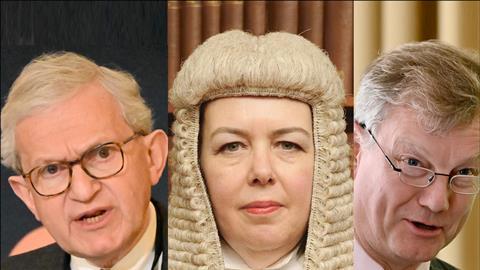
9.45am: Good morning, everyone. Welcome to our live coverage of the Mazur appeal from the Royal Courts of Justice. You're probably thinking, 'Who are you? Where's John Hyde?!' Fear not, John, who has been closely covering this case, will be back tomorrow. I'll do my best to report on today's proceedings. The hearing, which began on Monday afternoon, resumes at 10.30am before master of the rolls Sir Geoffrey Vos, chancellor of the High Court Lord Justice Birss and Lady Justice Andrews. Wish me luck elbowing all the lawyers out of the way so I can bag a seat in court 71.
CILEX, who is leading this appeal, will be continuing its submissions this morning, followed by the Association of Personal Injury Lawyers and Law Centres Network, who both favour the appeal. The Law Society, Solicitors Regulation Authority and Julia Mazur will argue in favour of upholding the High Court decision.
A reminder for you (and me) on what this case is about: last September, Mr Justice Sheldon ruled in Mazur that litigation was a reserved activity and as such could be conducted only by authorised individuals. Appealing the judgment, CILEX argues that in the Legal Services Act parliament never intended to alter the settled position that solicitors could conduct litigation through unauthorised but supervised staff.
This article is now closed for comment.




Mazur Monday: CILEX reveals its arguments as Court of Appeal case set to start

Representative body set to argue that Mazur ruling runs contrary to core purpose of Legal Services Act.
- 1
- 2
- 3
 Currently
reading
Currently
reading
LIVE: Court of Appeal hears submissions on day two of crucial Mazur case
- 5
- 6
- 7







44 Readers' comments