






















A cross-party group of MPs has told the government to stop treating access to justice as a collection of ‘disconnected programmes’ and grip the problem of unmet legal need by setting up a National Legal Service akin to NHS 111.
To help fund the service, the House of Commons justice select committee tells the government in a 138-page report published today to raise extra ringfenced cash through a 'portfolio' of funding mechanisms such as interest on client account cash and 'carefully targeted' levies on litigation funding profits and high-value litigation.
The committee's central recommendation of a National Legal Service concludes a wide-ranging access to justice inquiry that commenced in July 2025 under then chair Andy Slaughter, now solicitor-general.
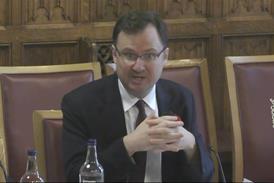
Committee chair Catherine Atkinson said: 'Demand for legal help is rising, yet advice services are shrinking and where you live can determine what help you can get. We recognise the value of getting help early in the NHS. The same principle applies to justice. Early legal advice can help people resolve problems before they reach a court or tribunal, saving them time, money and stress.'

Atkinson said the National Legal Service would be modelled on NHS 111, giving people somewhere to turn to when they first have a legal problem to understand their rights and find help.
'Such a permanent mechanism is essential for understanding legal need, coordinating activity across departments, monitoring service capacity and providing greater coherence. For too long, legal advice has been provided through a disjointed system, with responsibility spread across government departments, councils, charities and regulators. The Ministry of Justice should take the lead in coordinating services, checking whether they can meet demand and acting where people are going without help.'
Atkinson added: 'Legal rights are meaningful only where people can recognise them, obtain reliable assistance and secure an effective remedy. The MoJ must treat access to justice as a core purpose, not as a collection of disconnected programmes.'
Law Society president Brett Dixon said: ‘Civil legal aid is a vital public service that supports our communities and reduces the strain on other services. As the report makes clear, the legal sector relies on a patchwork of legal aid, pro bono work, charitable grants and short-term government programmes. A National Legal Service is a helpful addition to signposting people to legal advice but is not a substitute for a sustainably funded network of local legal providers.’
The idea of a National Legal Service is not new. Solicitors Roger Smith and Nic Madge unveiled a blueprint for their proposed vision of a National Legal Service at an event in Westminster in 2023 to mark 10 years since the controversial Legal Aid, Sentencing and Punishment of Offenders Act came into force.





No comments yet