




















A leadership judge has told expert witnesses to start disclosing their use of artificial intelligence to the court and solicitors immediately, in advance of new rules obliging them to do so.
Where AI is used in a way that ‘may directly or even indirectly generate or influence the content of your evidence’, Mrs Justice Joanna Smith told today’s Bond Solon Expert Witness Conference yesterday, experts can expect their reports ‘to be the subject of searching questions in cross-examination’ if proper disclosure is not provided.
The judge, recently appointed interim deputy president of the Business and Property Division, co-chaired the working group that produced last week’s Civil Justice Council report on the use of AI for preparing court documents. This recommended the introduction of a rule requiring experts to make a declaration on their use of AI - but only where they have used AI tools to generate or influence the substantive content of their report.
She said: ‘We believe that this declaration will need to provide sufficient information to facilitate effective scrutiny of the expert evidence and envisage that it may include disclosure of the methodology used, confirmation as to the appropriateness of AI use, for that purpose, and - exceptionally although not always - the tool that has in fact been used.’
The CJC recommended that the new requirement be incorporated in revisions to guidance dating back to 2014 for the instruction of experts in civil claims. But experts should not wait, said the judge: ‘In my view, experts should be thinking about the types of questions that I have identified, and where appropriate, declaring that they have used AI, particularly where, as I’ve said, it influences the substantive content. Obviously, there is at the moment no requirement in the rules that that should be done. But if it is not done, you may find yourselves under cross-examination and potentially open to criticism for not having adequately declared your use of AI.’
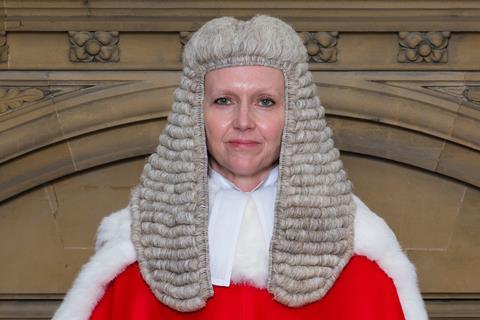
Opening her keynote address, Mrs Justice Joanna Smith told hundreds of experts gathered at Westminster’s Church House that the credibility of the expert, ‘which so often turns on his or her compliance with their fundamental duties to the court’, lay at the heart of her remarks. ‘The advent and rapid development of AI has not changed and will not change those duties,’ she stressed. ‘The obligations of independence, objectivity, transparency and professional competence remain exactly the same as they were before the emergence of AI.’
She added: ‘At a more philosophical level, the key risk from the use of AI by experts, as I see it, is in the erosion of independent judgment, the outsourcing of your opinions to an AI agent, and thus the loss of expert integrity. Returning to a more practical level, significant risks highlighted by some of the reported cases of which many of you will be aware, are: the dangers of a lack of training in the use of the relevant AI tool; a lack of understanding as to what it is capable of doing; and a failure to ensure adequate levels of oversight.’
The judge concluded by suggesting practical safeguards that every expert should bear in mind upon receipt of instructions. These include clarifyng 'if the expert can use AI or is it prohibited for some reason, such as over intellectual property concerns, data protection or regulatory compliance?
'Even if your instructions do not raise the issue, I think it makes good practical sense for you to disclose your intended use in the first instance to your solicitor and to discuss that use with your instructing solicitors,’ she said. 'The future belongs to experts who understand both the capabilities and the limitations of artificial intelligence, who keep abreast of new technologies, and who use AI thoughtfully, appropriately, and where necessary, transparently in support of their overriding duty to the court.'







No comments yet