























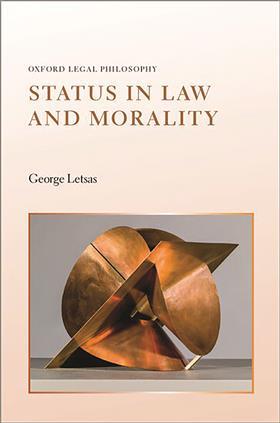
Status in Law and Morality
George Letsas
£105, Oxford University Press
★★★★✩
Two ghosts haunt this volume: political philosopher Samuel Freiherr von Pufendorf (1632-1694) and comparative jurist Sir Henry James Sumner Maine (1822–1888). Maine’s thesis – that as societies became more sophisticated, they moved from status to contract – was hugely influential in the 19th century and beyond. Pufendorf, by contrast, suffered from neglect after being at the forefront of jurisprudence. This was partly because of his support for natural law theories (even though, as a Lutheran, his approach to natural law differed from Catholic thinkers), and also because his views on status were in opposition to Maine’s.
Maine’s notion that status was a medieval relic, to be relegated in favour of freedom of contract, won out over the near contemporary views of Benthamite John Austin, University College London’s first professor of jurisprudence. However, the social cost of allowing parties the apparent freedom to enter into one-sided bargains intensified as the 19th century ended and the new century began.
Pufendorf lived and died in the 17th century, developing a systematic and expansive jurisprudence against the background of a Europe devastated by the Thirty Years’ War, climate change and plague. Trying to wrest order from chaos, Pufendorf turned to Roman sources and to what was then contemporary moral philosophy to create a jurisprudence of social equality.
George Letsas has been inspired by Pufendorf to focus on status and particularly ‘role-status’. Letsas sets out ‘role-status’ as an asymmetrical social relation between two parties, one of which (the weaker party) suffers from dependencies or vulnerabilities vis-à-vis the stronger party. Examples are: employer/employee, parent/child, citizen/official, doctor /patient, teacher/student and tenant/landlord. The law has singled out, with varying degrees of success, a distinct legal status within such groupings.
In addition to role-status, Letsas looks at ‘rank-status’. This is the position one holds within a ranking scheme of a given society, where a person’s esteem is ranked comparatively to others. In the case of our two ghosts, for example, Pufendorf had modest origins as the son of a Lutheran pastor. Yet through his philosophical works, his university chairs and his favour with European rulers in the Protestant north, he was given Freiherr (baron) status. Maine, mainly through his work on colonial matters in India, was a Knight Commander of the Star of India and a Fellow of the Royal Society. These examples back Letsas’ claims on rank-status. Honorific titles are positional social goods created by the government, with a view to express esteem publicly and thereby institute a formal and top-down hierarchy of esteem.
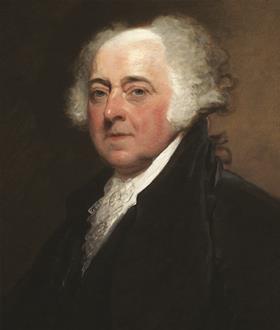
But these examples come from the 17th and 19th centuries. In the UK, and at least for the last 60 years or so, the purpose of such honours seems more to do with allowing the state to bathe in the glow of the celebrity of sportspeople and popular entertainers. Although I agree that the hierarchy of honours is ‘not innocuous’ and does ‘corrupt the public ecology of esteem by calling for social deference based on arbitrary grounds’, I fear it is ‘the public ecology of esteem’ that is corrupting those who award the honours, and not the other way round. In this regard, one can look to the US. Article I, Section 9, Clause 8 of the US Constitution put a stop to what one Founding Father, John Adams (pictured), wanted as a form of presidential address: ‘His Highness the President of the United States of America and Protector of the Rights of the Same’, a notion that would seem quite absurd in the 21st century.
Having set out his definitional stall, the author carefully builds his thesis that Maine’s notion of ‘status’ as an archaic and regressive framework for societal relations was wrong. In viewing ancient status roles in this way, Maine missed the point. Status was not harmful because it was archaic; it was harmful because the law sided with the stronger party at the expense of the worker. Status in Roman law backed the slave owner over the slave until manumission. But, at least for a Roman slave, manumission was possible. This was something slave owners denied their chattel slaves until the US abolished slavery, not long before some of Maine’s works were published.
However, Maine should have seen that relations based on contract were exactly that – contractual. Contract can be just as much a source of injustice as status. Consider the role played by ‘contract’ in the Victorian mining industry in the north of England, or, indeed, the post-bellum sharecropping system in the US. More recently, contract has also figured in attempts to exploit weaknesses in bargaining power in gig economy cases. Ironically, this is the instrument of choice to deprive claimants of the status of (usually) worker.
Letsas then concludes that the status/contract transition that was such an influential aspect of Maine’s work created a false syllogism by equating progress with contract rights. Importing contract terminology on its own did nothing to protect the weaker party in the relationship. Contract has proved over the last 200 years to be an easy route for a dominant party to exploit the weaker. The author explains that it was beyond the scope of his work to examine normative gaps or inconsistencies in the legal doctrine of different jurisdictions, covering different asymmetrical social relations.
This work should prompt some judges and practitioners to revisit the asymmetric relationships they come across in practice, and to consider how status can trump contract, as it did in Autoclenz v Belcher [2011] UKSC 41.
Max D Winthrop is a partner at Sintons LLP in Newcastle









No comments yet