


















In contrast with Australia’s under-16 social media ban, the UK’s Online Safety Act will only require age verification for platforms that hosts or disseminates adult content or primary priority content, such as pornographic material, suicide, self-harm or eating disorder content. Whilst the UK’s age verification threshold is 18 years old, it is a more targeted approach to protect children from specific harmful content as opposed to a blanket platform ban in Australia. There is a risk of inconsistent approach with the Australia ban, for example, a number of online gaming platforms and messaging services which are not in scope of the under-16 ban still carries the risk of harmful content being distributed to children. An outright ban may also push under-16s to unregulated platforms without content moderation or protective measures that current social media platforms may have.
The UK’s approach answers the points made by those who brought a challenge, backed by The Digital Freedom Project, at the Australia High Court against the ban in Australia; in that a targeted approach to remove harmful content will avoid under-16s being punished and improving online literacy through education as well as enhanced safety measures will be a more balanced approach.

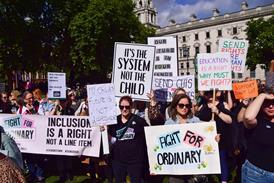
In Europe, whilst Denmark and Norway will be looking to follow Australia’s footsteps to require a 15 year old age limit for social media, and the European Parliament having passed a non-binding resolution for a 16 year old minimum age use for social media, the driving force in the rest of Europe and the UK for a social media ban is sluggish. A UK parliament petition to introduce a 16 year old minimum age for social media in the UK received over 130,000 signatures and it was debated in parliament in February 2025, however, in response to this, the government has made it clear that its priority is to use existing tools such as the Online Safety Act to protect children, as opposed to a blanket ban.
An Australian-style ban in the UK will likely bring up a whole host of issues, particularly in relation to the freedom of expression under Article 10 of the European Convention of Human Rights. Under the Human Rights Act 1998, such a blanket ban in the UK will be intensively scrutinised on its proportionality, on one hand, the protection of children from harm and on the other, the rights of children. Given the UK’s Online Safety Act is in its infancy, its effectiveness on protecting children remains to be seen but if the UK decides to introduce an Australian-style ban, questions will certainly be raised as to why it was not something that the Online Safety Act could address and whether children’s rights have been balanced. One thing is clear, which is that the debate on how to protect children online will not go away.
Terry Green is partner at Katten Muchin Rosenman LLP in London









No comments yet