






















The government’s response to the criminal courts backlog is beginning to resemble a policy made in haste rather than one grounded in evidence.

Last week, despite months of mounting criticism from across the legal profession, justice ministers continued to double down on proposals to curtail jury trials for a greater number of offences.
In Justice Questions last Tuesday, the lord chancellor, David Lammy, again insisted that 'we are determined to bring down the backlog'. No one is denying the need for swifter justice, but the question is whether the government’s chosen solution will actually achieve that aim.
So far, there remains little empirical evidence to suggest that removing jury trials for many cases will materially reduce the backlog at all.
The reality is that the crisis in the courts did not emerge overnight. It is the result of deep structural problems and years of neglect by successive governments when it comes to properly resourcing the justice system. The limited capacity of courts and staffing pressures are longstanding issues that cannot simply be solved by removing a centuries-old safeguard.
One of the clearest examples is the state of the magistracy itself.
Magistrates are already under significant pressure. Many are travelling increasingly long distances to attend court due to closures and shortages elsewhere. Further to this, volunteers face 'delays or outright rejections of legitimate expense claims', according to the Magistrates’ Association.
This slow, bureaucratic, and inflexible process understandably brings down morale.
Read more
Yet despite this, the government’s recruitment drive aims to bring in 7,000 magistrates over the next three years. It is an admirable aim, but is it realistic? Especially when we consider that around 2,000 magistrates were recruited during the past three years.
Also, recruitment is one part; the second is retention. How does the government plan to retain these volunteer magistrates if cases are then piled on at break-neck speed, without the necessary resources, all to accommodate their policy to curtail juries?
The consequences of a rushed process could have serious repercussions. Riel Karmy-Jones KC, chairwoman of the Criminal Bar Association, has warned of the danger of 'rough justice', while Kirsty Brimelow KC, chairwoman of the Bar Council, has raised concerns about potential miscarriages of justice if already stretched volunteers are overwhelmed.
Bolstering the magistracy is absolutely necessary if the government is serious about tackling the backlog. But it must be done properly, carefully and with adequate support. That is why I asked the lord chancellor last week whether the government would consider pausing its plans to curtail jury trials until a substantial number of magistrates had first been recruited and embedded into the system. He failed to commit to doing so.
What remains striking is the number of unanswered questions surrounding this policy. There is little detailed evidence and legitimate concerns arising from the impact assessment are virtually ignored.
The deeper this proposal is scrutinised, the more risks emerge.
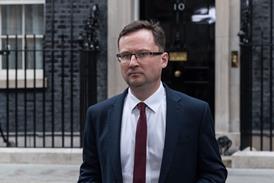
Dr Neil Shastri-Hurst MP is the Conservative Member of Parliament for Solihull West & Shirley, elected in 2024. He previously served as a British Army Medical Officer and barrister, and sits on the House of Commons Justice Committee









2 Readers' comments