


















A new campaign group is aiming to ‘unlock long-blocked reforms’ and push the Law Society of Scotland to finally change course on ABSs and get ‘in step with the rest of Great Britain’

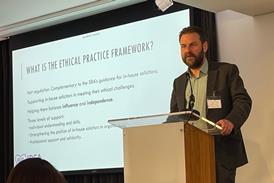
The Law Society of Scotland has a (relatively) new chief executive. He is dual-qualified Ben Kemp, former Kingsley Napley partner in London and later head of the Institute and Faculty of Actuaries.
Kemp’s installation at Morrison Street in Edinburgh is linked to this week’s establishment of a campaign group to lobby for the introduction of alternative business structures north of the border. Kemp knows legal business, the reasoning goes. His immediate predecessors were not lawyers. Time for another go, after years of stalling.
The Scottish Parliament formally approved the introduction of ABSs back in 2010, but the Society has since periodically moved to stave off implementation of the necessary rule changes. To widespread dismay, it recently announced that it was further deferring work on ABSs till 2027.
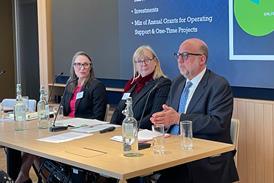
Led by three managing partners – Rob Aberdein of Simpson & Marwick, Marie Macdonald of Miller Samuel Hill Brown and Brian Inkster of Inksters – the ABS Scotland Group aims to ‘unlock long-blocked reforms that would allow law firms to offer equity to non-lawyers, access investment, and tackle a looming succession crisis across the sector.
'Scotland is completely out of step with the rest of Britain. Non-lawyer ownership has been delivering clear benefits in England and Wales for more than a decade. Yet here, we’re still being told to wait'
Rob Aberdein, ABS Scotland Group
‘Progress has been repeatedly stalled by regulatory inertia, with the Society imposing multiple delays – most recently a two-year pause justified by a claimed “lack of interest”, despite mounting evidence to the contrary,’ it added.
Such evidence is not hard to find, even in this journal. As the Gazette reported as long ago as 2012, the Society’s then executive director of regulation reported that increasing numbers of Scottish firms had been in contact to ask about becoming a so-called ‘licensed provider’.
Aberdein said this week: ‘Scotland is completely out of step with the rest of Great Britain. Non-lawyer ownership has been delivering clear benefits in England and Wales for more than a decade, from investment to innovation. Yet here, we’re still being told to wait. To claim there is no interest is simply untrue. We’ve seen nearly 20 firms step forward to join this group before it even launched. That should send a clear message: the profession is ready, the market is ready. The only thing missing is Law Society regulation, support and acceptance.’
Scottish firms backing the initiative include Harper Macleod, MacDonald Henderson, Jones Whyte and ‘several independent and high street firms from Kirkwall to Kirkcudbright’. Four more supporters have joined since Monday’s announcement, Inkster told the Gazette. Another leading law firm is expected on board shortly.
Supporters also argue that the lack of implementation in Scotland has left the profession at a competitive disadvantage to counterparts south of the border. Several de facto ABS models are already operating in Scotland, either through workaround structures or via the Scottish offices of English and Welsh firms.
The Scots have also noticed the millions of pounds of private equity piling into English firms. ‘It strikes me as a curious twist that Scotland – the cradle of Adam Smith and modern capitalism – has spent 15 years blocking the very reforms that have allowed English firms to modernise, scale and attract private equity,’ says law firm M&A specialist Jeff Zindani. ‘I say that as someone who has advised a number of Scottish firms over the years and seen first-hand how much potential is sitting in neutral.’
Zindani counsels caution, nevertheless: ‘Scotland may yet have the last word. England’s PE-backed firms remain mid-cycle, their final reckoning still to come when the exits land. And with new, more controlled investor models emerging – particularly in the US – Scotland’s caution may turn out to be less resistance and more canny foresight.’
Private equity gold is hardly the main attraction, however. As Macdonald noted, more than 40% of Scottish law firms are sole practitioners. If they retire without a successor, the business dies with them. Indeed, it is not unusual in Scotland that on the death of a sole practitioner the Society itself intervenes, appointing a judicial factor to move the business of the law firm on elsewhere. The associated costs, and often a lack of any sale price, leave nothing for the beneficiaries of the deceased’s estate.
ABS Scotland wants the Law Society to reconsider its most recent two-year pause on progressing ABS regulation, claiming it could further delay reforms for as long as five years. It is also calling on the Society to open for applications immediately and accept the group’s offer of forming a subcommittee to assist with delivery.
Kemp is not slamming the door. ‘We understand the importance of law firms being able to innovate and adopt different business models,’ he said. ‘We also understand the sense of frustration that we have not been able to implement ABS before now. That’s why it’s good to see this new group as a collective voice for many of those considering non-solicitor ownership. I’m looking forward to discussions with the group in the next few weeks.’
This article is now closed for comment.










6 Readers' comments