





















A fairer allocation of briefs to women barristers is one of Kirsty Brimelow KC’s 12 priorities as bar chair. Protecting lawyers from abuse and intimidation is also high on her agenda
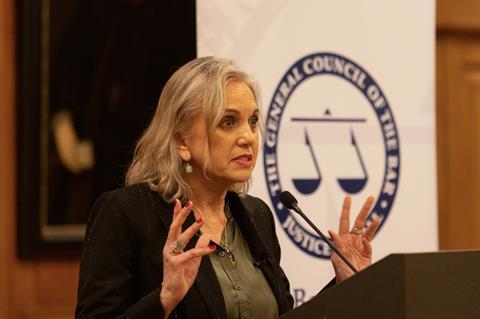
Like the Law Society’s president, the chair of the bar occupies their office for just a year. So Kirsty Brimelow KC is certainly ambitious in setting 12 priorities for the next 12 months.
In her inaugural speech last Monday, Brimelow cited just one priority that directly involves solicitors and Chancery Lane. The Doughty Street Chambers silk intends to revive efforts to ensure a fairer allocation of briefs to women barristers. She has already met Law Society president Mark Evans to secure the collaboration of solicitors in the renewed campaign.
Gendered brief allocation is certainly a longstanding bugbear of the bar. Back in 2019, the Bar Council’s head of diversity and inclusion, Sam Mercer, suggested that the bar could work with the Society to challenge both lay and professional clients to improve. Mercer noted that some magic circle law firms were already monitoring gender with respect to their briefing practices.
In the intervening years, Mercer told me, the Bar Council has prioritised ‘big briefers’ the Crown Prosecution Service and Government Legal Department. They have been auditing ‘who’s getting what work’ and ‘improving transparency to encourage equality of opportunity’. Her organisation has also engaged with some law firms, including Allen & Overy.
A&O Shearman, as it now is, follows a strategy for barrister brief allocation designed to increase diversity and broaden the firm’s exposure to new counsel.
What of barristers’ clerks? Mercer adds that the Bar Council has worked with chambers’ clerking and practice management teams to improve transparency and help ensure that, ideally, barristers can access the work they want. Having built up a body of resource, broadening out that work to encompass the wider solicitors’ profession is a logical next step.
'Only two days ago, a barrister wrote to the Midland Circuit Leader about his chambers receiving anonymous calls, one accompanied by verbal abuse, after he had represented an Afghan refugee convicted of rape'
Kirsty Brimelow KC
A Law Society spokesperson commented: ‘We continue to work closely with the Bar Council on the development and evolution of the Women in Law Pledge, which recognises that closing the gender pay gap and tackling persistent inequalities requires the legal sector to work collaboratively across solicitors, barristers, chambers, in‑house teams and clients. The Pledge forms part of the Law Society’s new three‑year Equality, Diversity and Inclusion strategy.’
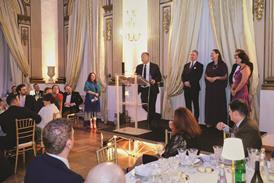
Addressing the earnings gap at the self-employed bar will also involve a campaign to improve billing practices, Brimelow told 300 lawyers gathered at Gray’s Inn. ‘Junior barristers and women often don’t bill to reflect the work that they have done, feeling pressured or lacking confidence to bill the full hours that they have worked,’ said Brimelow. Bar Council research shows that women continue to earn less than men across all experience levels and in every area of practice at the self-employed bar.
The new chair’s team would seem to be appropriately constituted for the task. Brimelow leads the first all-female leadership team at the Bar Council, with the Crown Prosecution Service’s Heidi Stonecliffe KC as vice chair and Enyo Law partner Lucinda Orr as treasurer.
Protecting lawyers subject to abuse and intimidation is also high on Brimelow’s agenda. She will press the government to ratify the Council of Europe Convention for the Protection of the Profession of Lawyer. ‘Only two days ago, a barrister wrote to the Midland Circuit Leader about his chambers receiving anonymous calls, one accompanied by verbal abuse, after he had represented an Afghan refugee convicted of rape,’ she said. ‘Conflating barristers with their clients stabs at the heart of the rule of law and the Bar Council is firm in its support of our barristers.’
Brimelow, a former chair of the criminal bar and Bar Human Rights Committee, said her first priority is tackling the crisis in the criminal courts and legally aided bar. She is leading the bar’s opposition to lord chancellor David Lammy’s curbs on jury trials.
‘The latest government proposals restricting jury trials will not reduce the backlog of cases, built up over years of financial slash and burn of the criminal justice system, but may further erode trust which hangs by the thread of citizen participation in the criminal courts,’ she said. ‘The pragmatic points are that the reduction of juries would have no impact on the existing backlog, as it would take effect towards the end of this parliament. Impact even then is highly uncertain.’
She added: ‘Meanwhile, energy and focus are drained from implementing the urgent reforms now that would decrease the backlog. These include intense case management: successful reduction of the backlog can be seen in courts where there has been proactive triaging of cases led by CPS and police, and opening the courts that continue to sit empty by removing the cap on sitting days. If we can implement these reforms in the courts, and have every courtroom sitting, we can reduce the backlog.’
This article is now closed for comment.













5 Readers' comments