






















Practicing Legal Design
Marco Imperiale
£159, Globe Law and Business
★★★✩✩
Back in 2014, Mitu Gulati and Robert E. Scott published The Three and a Half Minute Transaction: Boilerplate and the Limits of Contract Design (University of Chicago Press). The book examined the fallout – or lack thereof – from a challenge to a pari passu clause in cross-border financial contracts. Having been in relevant precedents for over a century, it quickly emerged that the intended meaning had long been lost. In short, no one knew what it meant.
The outcome of the case – albeit criticised – rendered the clause suspect, yet nothing happened. The clause remained in the contracts. Worse, no effort was made to clarify the wording. Assumptions by generations of lawyers that someone, somewhere must understand it had cemented the clause’s place. Removing it was the riskier option.
For the nascent discipline of legal design, this is precisely the justification for reappraising not only individual clauses but also the approach to contract creation itself. What might a contract look like, Marco Imperiale asks in Practicing Legal Design, if created from the ground up with its end-users in mind?
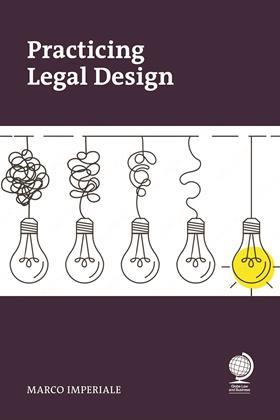
Where studies in jurisprudence tease out explanations for legal frameworks, legal design appears to be concerned with practising law in the most elegant, user-friendly manner. ‘Appears to be’ because the scope of the project is not entirely clear, something recognised at the outset with a discussion of what legal design is not. It is wide-ranging, moving from the visual – fonts, use of graphics, excessive capitalisation – to the elemental – what is the point of this contract and who is it for?
While occasionally frustrating for a reader, this is not a criticism: boundaries remain ill-defined, but the ideas are exciting. Applying a human-centred approach requires rethinking traditional legal services and documents from the perspective of those who use them, be they the clients, the lawyers, the state or the public. There are many areas of practice that the project can positively influence – use of plain language, adopting visuals, reconsidering contractual structure, all set against the possibilities of AI – highlighting that reliance on precedent can be limiting.
The reader comes away equally enthused by the suggestions and uncertain how legal design would gain traction in a conservative profession which acts – at least in the realm of contract – to document agreement using terminology understood by its practitioner community. There is no question, however, that the call to improve, which underlies the discipline’s current objectives, should be welcomed.
Tom Proverbs-Garbett, director – TrustPoint Governance, is the author of Being a Trainee Solicitor: How to Survive and Thrive









No comments yet