



















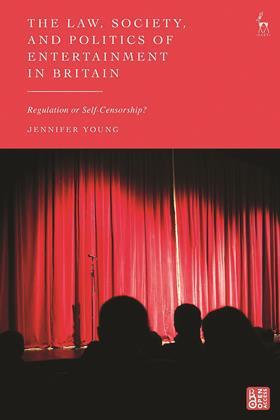
The Law, Society, and Politics of Entertainment in Britain: Regulation or Self-Censorship
Jennifer Young
£90, Hart Publishing
★★★✩✩
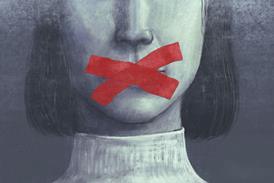
Free speech continues to be a disputed concept in most areas of life, not just politics and academia. It is equally critical and contested in the entertainment sphere. If authors, artists and directors are constrained by censors in the name of blasphemy, sedition, public decency, or anything else, then speech is not free.
State censorship of entertainment in Britain is the subject of this new book by Jennifer Young, who has the interesting title of researcher within the ‘Humour in Court’ project at the University of Groningen in the Netherlands. Based on her PhD thesis, the book traces the history of state censorship of the theatre and the current state of the law. It then discusses conceptual arguments for and against state regulation and self-regulation.
Despite the title, the book is not wholly confined to the UK. The author recounts US presidents (including the present incumbent) taking great offence at satire, and some dismal cases of oppressive censorship, even in ostensibly modern liberal democracies such as Germany and Italy.
In order to discover how present-day laws and self-regulation work on a quotidian basis, Young interviewed a number of prominent figures from the world of entertainment. They included regulators (the chair of Ofcom), broadcasters, producers, managers, writers and performers (Dominic Frisby, Graham Linehan, Christine Rose and Alexei Sayle). All of them, one imagines, would have had stimulating observations, whether or not one agrees with their work or political opinions.
One of Young’s central themes is that artistic work is not constrained solely by the law. If someone’s work falls foul of the mores of the commissioning editors, promoters or broadcasting panjandrums, it won’t be commissioned; or, in modern parlance, artists may be ‘cancelled’ – that is, find themselves unemployable, even if they have not broken any laws.
She reaches a depressing conclusion, namely that British satire has been ‘left toothless’, partly because of the fear of offence and due to performers misinterpreting law and editorial guidelines. Black letter law such as the Communications Act 2003, she explains, and even the Ofcom Code, are not pre-eminent in their thought processes. She suggests training in the code and more robust protection of artists from institutions.
The book is a valuable contribution to an inherently insoluble – yet always vital – debate.
James Wilson FRHistS is an independent legal author. His most recent book is Lord Denning: Life, Law and Legacy (Wildy, Simmonds & Hill, 2023)






No comments yet