





















Theatre: Ambiguous Proposition
Performed at Herbert Smith Freehills Kramer’s London office
Ambiguous Proposition is a legal drama that brings to life an important area of law in a way that keeps you thinking. This one-woman monologue was written by playwright and employment lawyer Shona Newmark and performed by the mesmerising Hilary Cordery (who I thought was a full-time actor, but she is also an employment lawyer) at the London offices of Herbert Smith Freehills Kramer. It has also been performed at Skye Bridge Studios, the Edinburgh Fringe, Bromley Little Theatre, Union Theatre in London and Edward Alderton Theatre in Bexleyheath.
It was staged by the City of London Law Society’s Employment Law Committee, raising £3,000 for the mental health charity LawCare through ticket sales and performers’ donations of their fees.
The protagonist, Margaret Woods, is an employment tribunal judge whose son is accused of sexual harassment in the workplace. Margaret is passionate about her work and her family, wryly identifying with post-menopause killer whales who fiercely protect their adult sons. She is assertive and sweary (mostly to herself, but sometimes to others as well), and initially confident that by getting involved she can use her knowledge of the law and the tribunal system to make the problem go away or exercise damage limitation for both her son and her career.
Ambiguous Proposition is a play about judgement (societal as well as legal). It covers themes of consent, responsibility, justice and wellbeing, but it doesn’t make a judgement. Instead, it leaves it to the audience to decide. Each scene is carefully framed, outlining the legal test for sexual harassment and the applicable defence for each allegation. It presents the ‘facts’ of the case from the perspectives of Margaret, her son, his accuser and the organisations they work for. Everyone sees things through their own lens. But, as anticipated by a clever double-glazing analogy in an early scene, Margaret’s multi-faceted life and her dual perspective as a mother and an employment tribunal judge mean she is conflicted and distracted. Perhaps exacerbated by some of her decisions, the situation escalates out of her control, and she – and everyone in the audience – is left to consider the consequences.
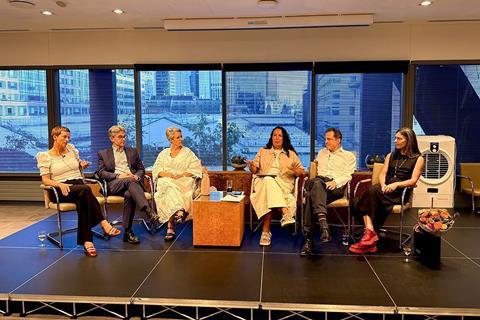
The performance was followed by a panel discussion (pictured) moderated by Emma Williams, general counsel at Simmons & Simmons and chair of LawCare. Newmark and Cordery were joined by Colin Leckey, partner at Lewis Silkin, Florence Brocklesby, founder of Bellevue Law and Andrew Taggart, partner at Herbert Smith Freehills Kramer, who discussed the challenges presented by complex, nuanced cases as organisations increasingly adopt zero-tolerance policies for sexual harassment.
This performance was for one night only, but I hope it is repeated elsewhere – perhaps at another firm or at a law school, as it is a great learning experience. It is sharp, funny, sometimes uncomfortable, and certainly thought-provoking.
Thanks to Patrick McCann, CEO of the City of London Law Society, for the invitation.
- The next opportunity to see Ambiguous Proposition is at the Bakehouse Theatre in Blackheath on Sunday 13 September.
Joanna Goodman MBA is a technology journalist








No comments yet