






















An absorbing ‘side-hustle’ or pastime can be compatible with – and even helpful to – a legal career, hears Catherine Baksi
The low down
For many, a legal career is a vocation. But what if you have a second calling – something more than a hobby that you want to achieve. Does it need to be consigned to a box in the attic marked ‘missed opportunities’? Certainly not. Even in the demanding age of modern legal practice, the right conditions might be found to combine a legal career with a serious secondary interest. Lawyers are also counted among the ranks of farmers, writers, painters, athletes and restaurateurs. For many, this is not ‘time off’ from the law. Indeed, there are professional benefits to be accrued from the wider experience and insights gained.
For many, alongside the new year’s resolutions sit profound regrets. Something deeper than not having made it to the gym often enough in the previous 12 months. A path not taken when a training contract was chosen at a fork in the road. Too late? Not so.
In fact, a legal career may not be a barrier to pursuing a second passion.
The Gazette spoke to lawyers with just those creative, sporting and altruistic pastimes and even side-hustles, asking them how they balance these with ongoing commitments to their legal careers.
Novelist
By day, Anna Mazzola is a solicitor and consultant with the Centre for Women’s Justice, challenging injustice for women in the criminal justice system. By night, she is an award-winning writer of historical crime fiction and thrillers – often inspired by real events.
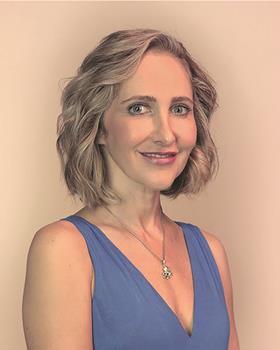
Having studied English at university, Mazzola says she needed ‘a creative outlet’ outside the law, but working as a busy criminal solicitor, then at the London law firm Hickman & Rose, left little spare time.
She started writing nearly 15 years ago while she was on maternity leave with her first child. ‘I am now writing book eight and my son is much taller than me,’ says Mazzola.
‘Don’t assume that because you don’t have much time, you can’t be a writer,’ she advises. ‘I started writing short stories in cafes while my baby son slept. I continued writing when I returned to work, often writing on the bus or in snatches of time at the weekend.’
One of her short stories was about a woman called Sarah Gale who had been convicted of aiding and abetting a murder in south London in 1837. It won a competition and became her first novel, The Unseeing, which was published in 2016.
Mazzola continued working part-time at Hickman & Rose and then Birnberg Peirce while writing, but as her books became a larger part of her life, she reduced her legal work.
Her first thriller, written using the nom de plume Anna Sharpe, was Notes on a Drowning, published last year. The novel follows two determined women – a legal aid lawyer and a special adviser to the home secretary – as they investigate the death of a Moldovan girl found drowned in the Thames.
Mazzola says the story ‘about determined women, exploitation, coverups and Russian money, certainly came from some of the anger I feel at seeing certain men get away with abuse time and time again’ – and also reflects ‘office politics from legal aid firms – changed and enhanced of course’.
To become a writer, she insists: ‘You don’t need a fancy desk or an expensive writing course. You just need to want to write and to be bloody-minded enough to keep going in the face of rejection and criticism.’
You also need to read a lot and pick things apart, she adds, skills that all lawyers have.
Rock photographer
From folio to film. Denise Lester, a solicitor- advocate specialising in child care law at McCormacks in London, is also an acclaimed music photographer.
She can often be found in the photographic pit at blues and rock concerts. Lester has captured legends such as Bruce Springsteen, Paul McCartney and Lenny Kravitz, as well as Joe Bonamassa, Kenny Wayne Shepherd and London Blues band The Cinelli Brothers.

Lester took up what had been a hobby more seriously in the wake of three family bereavements a few years ago. ‘It was an antidote to grief,’ says Lester, that gave her a ‘sense of positive purpose’ and joy.
‘The skill and focus of being a solicitor is transmuted to the lens,’ says Lester, who writes and photographs for Blues in Britain and the Wrinkly Rockers club online. She combines gigs with her work through ‘robust time-management’. Her tip for other budding photographers is ‘be zen and focused in the moment’.
Rugby international
Several solicitors combine their work with a passion for sport. Vicky Tomlinson, a partner in Browne Jacobson’s corporate health team, is also an international touch rugby player.

Currently taking a break after having her second child, Tomlinson has won major trophies for England, including a gold medal in the Touch Rugby European Championships in 2022 and a bronze medal at the World Cup in Malaysia in 2019.
A member of Nottingham Touch Club, Tomlinson tells the Gazette: ‘I started playing socially in a local league about 15 years ago.’
Balancing a career in law and playing sport at a high level is possible, she insists, ‘as long as you are organised and communicate well with your team’.
In addition, Tomlinson says: ‘The firm was great at supporting me and giving me the flexibility I needed to train and compete. Browne Jacobson really encourages you to bring your whole self to work. If you have an idea or a project, they will support you as much as they can.’
Martial arts instructor
Carl Woolf, a solicitor-advocate and partner at Woolf Law in London, works evenings and at weekends as a martial arts instructor, teaching adults and children self-defence.

‘As a grizzled old criminal lawyer, my opening introduction to each new class or student is that “I’m going to teach you to defend against the people that I defend”,’ he quips.
Before qualifying as a solicitor, Woolf worked in security and was a bodyguard for some high-ranking public figures. His martial arts training, he says, ‘gives me a unique insight into the way that people behave under stress, both from an offender point of view and a defendant point of view’ – knowledge he uses when dealing with cases of violence.
On a personal level, Woolf says that the training ‘helps me keep calm, patient and confident when dealing with volatile clients in the cells and/or at court’ and with the ‘daily stress of working in the criminal justice system’.
Comedy and protest
Abby Rolling was a criminal defence solicitor for 30 years. ‘They finally let me out for good behaviour,’ jokes the full-time writer and comedian on her LinkedIn profile.
Rolling qualified as a solicitor in 1995 and gained her higher rights of audience five years later. She then wrote in her spare time, pitching pilot scripts and treatments for television, based on her daily experiences. Through her writing, she aims to educate the public about the importance of the criminal justice system, the perilous state that government underfunding has left it in, and what she brands as the ‘systemic denigration’ of criminal defence solicitors.
After moving to London, she went freelance in 2012 to enable her to spend more time writing before turning her hand to comedy and stand-up, performing in clubs, pubs and festivals. Her hit show Shit Lawyer featured at the Edinburgh Fringe – ‘channelling those same themes into a unique blend of comedy and protest’.
Rolling says: ‘We know that a healthy criminal justice system is everyone’s insurance policy if they need it. It’s also an emotionally bruising and darkly funny world which remains largely obscure and arcane to the layperson.’
Her desire to write for television was born when she snuck into her parents’ bedroom, switched on their black-and-white television and stumbled across the BBC’s Play for Today. It was ‘Abigail’s Party’ starring Alison Steadman and Janine Duvitski. Ten-year-old Rolling was hooked.
‘Fast-forward 15 years, as a newly qualified solicitor on a conveyor belt of windowless custody suites and dilapidated court buildings. Every day in the magistrates’ court felt like being on the set of a Mike Leigh production and inspired me to write.
‘Good writing is like taking your clothes off in public, which possibly explains the mixed response to my material,’ she quips.
Last year, Rolling quit private practice with the intention of developing her career in writing for television. She is represented by literary agent Frances Arnold. The business is ‘a bit like communicating with the [Crown Prosecution Service]. It’s painfully slow and fraught with uncertainty’. But her previous career has taught her persistence and she is keen to hear from lawyers with stories to tell.

Racehorse breeder
Jane Keir, a former senior partner at Kingsley Napley, is now a partner at the firm, where she specialises in family law. Away from the office, she breeds racehorses and owns a stud farm in Oxfordshire.
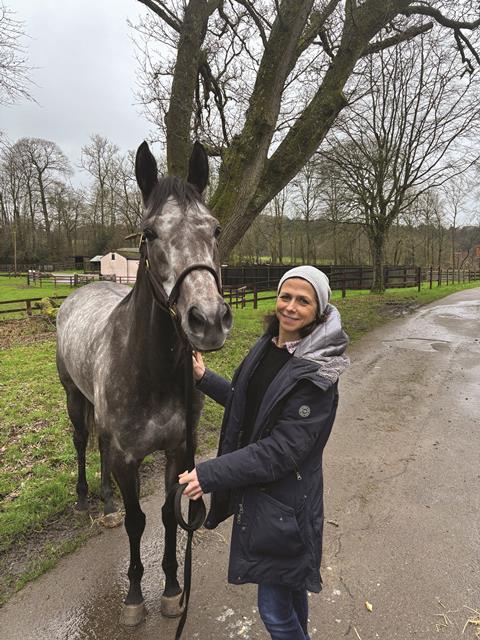
‘I was born with a love of horses and got into horse racing when I qualified as a lawyer,’ says Keir, whose passion led her to move to London to make it easier to get to courses such as Ascot, Sandown and Kempton.
‘The first horse I bought a share in won five times. I thought “this is easy”,’ recalls Keir. She started breeding racehorses as a way of getting closely involved with the sport. In addition, ‘creating my own production line afforded me the best chance of producing a good horse at an affordable price’.
Keir has bred over 25 winners and produced some top-flight horses. Her best to date is Flight Plan, who ran in the 2000 Guineas at Newmarket in 2023. ‘One to watch,’ she says, is Pivotal Attack, a two-year-old who came second in the Group 3 Weld Park Stakes at The Curragh in September, earning an entry for the Irish 1,000 Guineas in May.
Now Keir is in the process of setting up an equine unit for Kingsley Napley, focusing on the needs of the horse racing world, including property management, reputation management, and business and tax planning.
Farmers
‘Tired of partnership and practice management’, in 2012, family law specialist Jeremy Freedman and his wife sold their north London home and bought a five-acre smallholding 50 miles away in north-east Bedfordshire. He became a consultant, working from home and commuting to the office two or three days a week.
Over time, the couple acquired hens, ducks, geese, cows, sheep and goats. They make cheese, as well as jams, pickles and chutneys, with the fruit from a plethora of trees, and grow vegetables.
During lockdown, they expanded their skills to making sourdough and bought honey bees, with the aim of making 120 jars of honey each year.
‘The peace and calm contrasts well with the hours spent on the phone, in Zoom meetings or in front of a screen,’ says Freedman, who is now a consultant at Melanie Craig. ‘I am a more effective lawyer for having a real life away from my office. My clients love it – who doesn’t want to talk on the phone to their divorce lawyer with a cockerel crowing in the background or have their call interrupted by a sheep lambing?’
Flower grower
Samantha Bradley is a consultant to the Hong Kong law firm Ravenscroft & Schmierer and is starting a second consultancy with a boutique litigation firm in England this month, having been a wealth-management and relationships lawyer for 30 years.

Her sideline is farming flowers. In 2022, Bradley and her fiancé took on a family farm in Turkey, focusing on organic regeneration and natural beauty, and growing orchids and saffron – which both have beneficial medical and nutritional properties.
The couple are aiming high and hope to become the eighth-largest producer of salep in the next few years, as well as to make a ‘meaningful introduction into the saffron market’, says Bradley.
Farming, she adds, complements her work as a relationships lawyer ‘because money is not what we live for. It’s about wellbeing, healthy relationships with other people and the planet we live on’.
Artist
Commercial solicitor Pey Can Su studied music before qualifying as a solicitor, but it is art that he now combines with his work. In 1996, he started attending evening life drawing classes at the Working Men’s College in London’s Mornington Crescent, planning his work so he could leave the office by 5.40pm and be in the class by 6.30pm.
Su, whose works are largely figurative, has drawn there at least one evening a week ever since. For eight years, he chaired the Law Society’s art group and his paintings sell well at its annual show.
He attended hearings of the Post Office Inquiry and drew while listening to the evidence. ‘I made a few paintings from the drawings I did. I was very pleased when one of these paintings ended up in one of the chambers at King’s Bench Walk,’ says Su, who suggests that having an interest outside of his profession helps him maintain a healthy work/life balance.
Restaurateur
David Roberts is a partner and head of CMS’s leisure practice where he has helped advise, sell and acquire several of the finest casual dining and fine dining restaurant groups in the country.
His knowledge and interest in the hospitality industry led him to partner with a colleague to set up a restaurant group. ‘That was more than 10 years ago. The company now owns five restaurants in London and Manchester – and a pipeline of others at the post-planning stage,’ says Roberts.
The restaurants trade as ‘Blacklock’, which he explains is ‘a quintessential English chop house that prides itself on being great value, great fun and great quality, all underpinned by 1980s music and a white chocolate cheesecake to die for’.
The business now has a full-time management team, but Roberts remains on the board. The restaurants benefit the firm and his clients through his enhanced understanding of the everyday problems they face, which gives ‘real-world experience to my advice’.
Lifeboat helmsman
In 2020, employment solicitor Elissa Thursfield made history by becoming the first female helmsman at her RNLI station in Abersoch, North Wales. Thursfield, who is the founder of HRoes, a legal and HR technology company, has been an RNLI volunteer crew member for 20 years.
‘The skills I have learned through the RNLI have been invaluable for my legal career. It has without a doubt made me more resilient, calm under pressure and much less prone to catastrophising,’ says Thursfield.
Anything you can do…
Seeking to combine a legal career with a significant other calling takes discipline and good organisation. Everyone the Gazette spoke to was clear on that point. But they were also adamant that the combination is not only achievable but desirable. And achieving it, they insist, is good for wellbeing and may even benefit your legal practice.
Catherine Baksi is a freelance journalist
Do you have a significant second role you combine with law? If so, the Gazette would like to hear from you. Contact catherinebaksi@hotmail.com or features editor Eduardo Reyes: eduardo.reyes@lawsociety.org.uk








4 Readers' comments