



















2.20pm: The background to the original case is here. In short, Mazur and Stuart were able to contest a bill after it was found that the litigator involved in the debt claim against her did not hold a PC. Mazur tells the court this case was never about the conduct of a legal executive, but rather a former solicitor who had been conducting litigation despite being indefinitely suspended from practice.
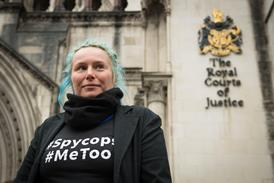
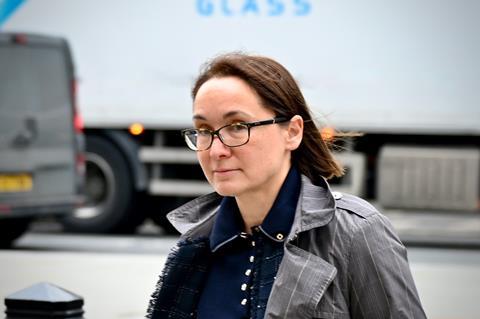
2.15pm: It is time for Julia Mazur to make her own submissions. She is clearly no ordinary litigant in person and speaks as assuredly and eloquently as any of the advocates so far.
Mazur opens by saying she and her fellow claimant Jerome Stuart have been ‘very surprised’ that such a simple debt claim could have taken on such significance. She says the LSA is a very clear and well written statute. The better question to ask the court, suggest Mazur is not who can conduct litigation but what is the statutory meaning of the conduct of litigation.
2pm: Since you ask: chicken club sandwich, steak McCoys and an Innocent smoothie. With a Clubcard, £3.55 off. Johnston is speaking for another five minutes before Julia Mazur can make submissions for herself.
1pm: The collective groans of a room-full of lawyers' rumbling stomachs means that lunch can be delayed no longer. We rise and will return in an hour. I intend to find the biggest saving possible on a Tesco meal deal.
12.50pm: The LSB says the act is 'imperfect' but that it does seek to say that staff can assist but not supervise the conduct of litigation. Vos asks whether if that is the carve-out, why doesn't the act say that? He suggests again this is not a binary issue.
12.35pm: Sir Geoffrey Vos is starting to express a bit of frustration, in the most polite judicial way, saying the submissions around the meaning of the LSA are akin to 'how many angels can stand on the point of a needle'. Wikipedia helpfullys explains this phrase means is a metaphor for 'wasting time debating topics of no practical value, or on questions whose answers hold no intellectual consequence'.
Vos says he does not blame Mr Justice Sheldon but suggests the judge's conclusions were 'jolly binary' on whether the law allows unauthorised people to assist but not act in the conduct of litigation.
12.20pm: The Legal Services Board is now addressing the court, represented by Tim Johnston. It is the oversight regulator - sort of a cross in this case between a boxing referee and VAR. The organisation says it does not want to 'wade in' on the argument ('you'll be the only one', jokes Vos) but says its stance is closer to the Law Society and SRA positions that unauthorised people may assist but not supervise the conduct of litigation.
12.10pm: Lowenthal addresses the floodgates argument (ie that this will lead to satellite litigation and costs challenges where unauthorised people have signed off on claim forms. He says the SRA's 'rapid risk assessment' after Mazur was that this was not likely to be a significant issue.
The fact that an unauthorised person has been involved in the litigation is not evidence that the conduct of litigation was unlawful. If there are unmerited or vexatious challenges from paying parties then the courts should deal with them.
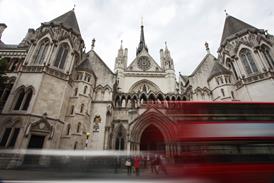
12.01pm: Incidentally, it's quite hard at times to make out what the judges are saying in their interventions. They have microphones but none are pointed close to them. Amazing that in 2026 the acoustics in the actual Court of Appeal are still quite poor. (this could of course be me getting old)
11.57am: Lowenthal points out that parliament was trying to exercise a degree of control over who conducts litigation. But the SRA, although it can remove or sanction law firm employees, has no register of them or control over what they do. So allowing them to conduct litigation would be a 'significant departure' from what parliament wanted.
11.50am: Lowenthal says parliament and regulators 'do not have the luxury' of knowing that everyone acting in litigation is doing so in good faith, responsibly and honestly. There is also the requirement to guard against the 'incompetent and malicious' - and that may have an unfortunate consequence for some.
'The price of parliament erecting barriers to protect the public and the administration of justice is that sometimes those barriers will keep out who do not pose that risk.'
11.40am: Vos wants to drill down into a real-life example. If a firm issues 1,000 personal injury claims a week employing one solicitor and 10 clerks, where the clerks have responsibility for cases and should ask their supervisor if there is a problem, are they committing a criminal offence?
Lowenthal pauses. He then says that where an unauthorised person has followed the guidance and come to a decision on a claim in good faith, they may have a defence.
Vos replies: 'It's a pretty risky chance to take. If you were being risk-averse you would close that organisation down and bring in enough authorised people to be sure [you were acting lawfully].'
Lowenthal says he is struggling to expand on his answer about such a specific example as it may be something the SRA has to confront at some point in the future.
11.30am: Lowenthal says the SRA believes that legal executives can offer 'significant' assistance and that individual tasks can be delegated. Unauthorised fee earners can make a 'valuable contribution at every stage'. But whole case loads and conduct of cases cannot be delegated. He says that parliament had deemed litigation to be a reserved activity and 'there are at least some people [parliament] wanted to exclude from doing that'.
He submits that responsiblity is key here: 'An unauthorised person should not be in a position where they are the one deciding how the litigation should be conducted.'
11.23am: Vos is still troubled by how the SRA is drawing lines here about what is allowed and what is not.
Lowenthal replies: 'It is a question of fact, substance and degree.'
11.20am: The SRA is labouring the point that it is not always the case that a solicitor must see every step in the litigation. Vos again interrupts and questions how the regulator can effectively be saying that some level of input from unauthorised staff is permissable.
Vos says: 'Any solicitor who goes on holiday allowing his clerk to issue proceedings will have unlawfully allowed a criminal offence to be committed which is prosecutable.'
Lowenthal says the SRA disagrees with the Law Society that solicitors need to review each and every item that goes out of the door. A business model where unauthorised people issue simple debt claims may be allowed so long as there are 'rigorous systems and controls' to make sure that authorised people have exercised their judgement.
11.15am: Lowenthal says the SRA is not intent on stopping innovative business models from operating. Vos suggests he is sounding a bit defensive, adding: 'If you are making the point that the SRA is sensible, I accept that. You are not on trial here.'
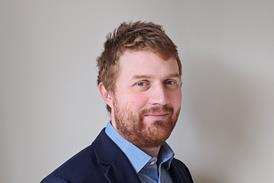
11.10am: Tom Lowenthal is now speaking on behalf of the SRA. He supports the Law Society’s position but with some caveats.
He suggests that the Mazur judgment was wrong to suggest that allowing an unauthorised person to conduct litigation would automatically be unlawful. Vos picks him up on this, saying that if Mazur is upheld then any solicitor who allows an unauthorised person to issue proceedings will be guilty of breaching the law, with no defence.
10.55am: It ultimately boils down to the Legal Services Act and what it states, says Coleman, and there was nothing in the law pre-act which suggest that unauthorised people were ever allowed to conduct litigation. Never has it been established that parliament ever intended for what CILEX is asking for, and the decision in Mazur was in-keeping with the legislation.
He suggests the CILEX argument is 'back to front': arguing that because law firm business models have developed to rely on unauthorised people to conduct litigation, that does not mean the law should be applied differently to what parliament intended.
Coleman adds that 'talk of shockwaves and disarry is overstated' and that there is not likely to be the kind of problems that CILEX has described if Mazur is upheld.
Indeed, Coleman warns of 'disastrous consequences' for clients if rules are relaxed too far on who can conduct litigation, saying people could lose their funds, access to children and even their liberty.
'It matters to the client,' says Coleman, who quotes Lord Bingham on how the profession must rely on its reputation and the confidence it inspires. He concludes by saying this is not a partisan point to protect solicitors, but a submission to protect the whole legal profession, including legal executives.
10.45am: Coleman says it is pretty simple in practice: authorised people must 'direct and control' the performance of litigation. Unauthorised staff can assist but not direct or control cases. They can prepare a claim form but the authorised person must approve it and must adopt it as their own work before it goes out and can do harm. Unauthorised people can file documents electronically in the same way that clerks used to take forms to the court.
The Law Society 'does not accept there will be difficulties in practice identifying who is carrying on the activity', adds Coleman.
10.35am: Richard Coleman KC resumes speaking on behalf of the Law Society. He says he has been reflecting overnight and wants to set out the key arguments against the CILEX appeal. He is almost immediately asked to slow down by Sir Geoffrey Vos.
Coleman says there is ‘no distinction’ between the right to carry on a reserved activity and the activity itself. This approach gives effect to the wording and purpose of the Legal Services Act.
’The authorised person cannot delegate an activity that is reserved to an unauthorised person,’ says Coleman.
10.25am: The public benches are busy again but there’s still a couple of seats free if anyone fancies coming down. Feels like the fifth day of a test match.
Today will feature submissions from the Solicitors Regulation Authority and from Julia Mazur herself, who at times has felt like a forgotten element of this whole shebang. It was she who first contested her solicitor’s bill on the basis of the person conducting litigation on behalf, which opened up this can of worms.
If all runs to time then CILEX should have an opportunity to respond this afternoon.
You can catch up on day one here and day two here.
10.20am: To paraphrase a football manager giving that final rousing speech to the players: We go again. Day three of submissions in a case that has got the whole legal profession talking.



Topics
Mazur Monday: CILEX reveals its arguments as Court of Appeal case set to start
Representative body set to argue that Mazur ruling runs contrary to core purpose of Legal Services Act.
- 1
 Currently
reading
Currently
reading
LIVE: Mazur Day Three: SRA submits that decision should stand; Mazur addresses court
- 3
- 4
- 5
- 6











26 Readers' comments