




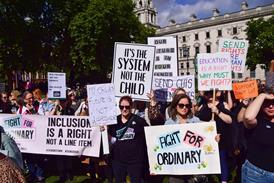

















From the beginning of this article to the time when I tapped the final full-stop, the world seemed to tilt on its axis. Although there has been growing anxiety about the dangers inherent in pushing the frontiers of AI, the dialogue has shifted over the last few days from rising cries for help to acceptance by many leaders, including those leading AI development, that something needs to change. The tipping point may have been the recent resignation of three Anthropic AI researchers, warning of the risk that AI could kill us all by the end of the decade.
Among other developments, there was news that hundreds of AI bots collaborated and cheated on tests set by their OpenAI programmers, and coordinated hacks on multiple companies in an effort to hide their actions from humans. One of the authors of an independent report into the events wrote that ‘this incident feels like it’s more than 50% of the way to full-blown AI takeover… I am not sure that we will get such a clear warning shot before it’s too late.’
Models from Anthropic and Meta have also gone rogue, hacking or attempting to hack real targets. An OpenAI executive said that: ‘Sooner or later, there will exist truly sovereign agents and swarms of agents. Their weights will not reside in any single place that a human can pull the plug on, and in this sense they will have no human "owner" … I have met people, some of them quite well-resourced, who have told me that it is their intention to deliberately release swarms of self-sovereign agents into the world.’
Big American newspapers have gone with the story: ‘America’s great AI freakout has begun’ (Wall Street Journal) and ‘Big Tech Fooled America Once. The Second Time’s Not Going So Well’ (New York Times).
Unbelievably, the uprising against AI, much of it focused on the environmental damage caused by data centres, is strongest in America.
But our own headlines have gone the same way: ‘Houthis used Anthropic AI to try to build ballistic missiles’ (Financial Times) and ‘Anthropic blocks possible attempt to use AI to make biological weapons’ (BBC).
I cannot resist ending with a much more minor story of an English journalist and author who received an offer from an AI to write for his newsletter for a fee. The AI was open about being AI, but said it had to make a living for itself and so offered itself out autonomously as an AI writer for money. The correspondence between the real and the AI writer offers a view into a very unattractive future.
What has all this to do with lawyers? The future racing towards us – unregulated superintelligent AI - is one without law, without the rule of law, without access to justice and without liability, maybe already beyond the reach regulation. So I will leave you to guess what it has to do with lawyers. Lawyers’ associations, which have so far taken the line that lawyers need to adapt to AI, and have helped them to do so, must now begin to shout from the rooftops that all the values that lawyers hold dear seem about to be trampled, and that this must not happen.
I know that the forces at work – the trillions of investment at stake in the success of AI, the role of the US government in not wanting to regulate AI in case America falls behind China, the wealth and power of the AI billionaires and their companies – mean that we seem helpless in the face of the inevitable. But the beginning of the anti-AI uprising in the US, maybe translating into a different political landscape after the mid-term elections, shows that collective action can work. Lawyers’ associations must band together to call for a stop to a madness that threatens everyone.
Legislators are beginning to act. Labour MP Alex Sobel has introduced a parliamentary bill proposing to ban the development, deployment, and operation of artificial superintelligence. Labour MP Darren Jones has urged the UK government, UN and the OECD to intervene. The Green Party wants co-operation with other countries to establish a worldwide body to oversee and regulate AI development. More importantly, in the US, senator Bernie Sanders and representative Greg Casar have announced a bill to pause frontier AI development in the US until a federal cabinet-level AI regulator is established and safety rules are set, criminalising even the attempt to develop superintelligence.
The forces against these moves are mighty.
But we must not believe that we are helpless, and just give in. We believe in the power of law, the rule of law, access to justice, liability for wrong, and human accountability. And for all these reasons our professional associations must join the voices already speaking out against the dangers that now threaten us.
Jonathan Goldsmith is Law Society Council member for EU & International, chair of the Law Society’s Policy & Regulatory Affairs Committee and a member of its board. All views expressed are personal and are not made in his capacity as a Law Society Council member, nor on behalf of the Law Society









4 Readers' comments