


















A draft bill published in the final days of Sir Keir Starmer’s government ‘will not impact the ability of parents to parent how they wish’, his equalities minister assured MPs on 25 June. ‘Our measures are not intended to infringe on the right of parents to bring up their children in line with their beliefs or core values,’ the deputy leader of the House of Lords promised peers a few days later. Are they right?

The Conversion Practices Bill, if introduced and passed in its current form, would make it a criminal offence to carry out an ‘abusive conversion practice’ on an individual that causes serious harm, alarm or distress. The maximum penalty would be five years’ imprisonment. Clearly, everything turns on how these terms are defined.
Clause 1 makes it clear that the bill is dealing with two different characteristics: ‘sexual orientation’ and ‘transgender identity’. The first of these is defined by reference to the Equality Act 2010. As interpreted by the Supreme Court last year in the For Women Scotland case, it applies to biological sex and not gender or certificated sex.
The second characteristic in the bill, transgender identity, is left undefined. Judges are offered three non-exhaustive examples – having the protected characteristic of gender reassignment, being ‘transsexual’ or identifying as not solely male or female.
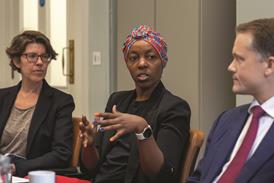
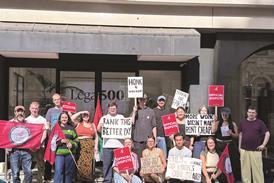
In a recent report for the thinktank Policy Exchange, Akua Reindorf KC (pictured) and Baroness Falkner of Margravine observe that the third category is ‘extraordinarily broad’. Non-binary identity is a concept not previously known to English law and inconsistent with the For Women Scotland ruling. ‘Under the draft bill,’ they add, ‘a person may face imprisonment for trying to persuade another that they are not, in fact, a cat.’

That is because a conversion practice is defined as ‘any conduct carried out by a person towards an individual with the intention of causing the individual to have or not to have, to believe that they have or do not have, a sexual orientation or a particular sexual orientation or… a transgender identity or a particular transgender identity’. Keen readers will note that the draft is missing an ‘or’ after the first comma.
But surely the practice must be ‘abusive’ to be criminal? Indeed, but what does that mean? Again, the courts are expected to decide. Judges can consider whether the words or behaviour used were sexual, violent, threatening, controlling or coercive. They can consider whether there was economic, psychological or emotional pressure. But might that criminalise the use of a person’s unwanted name or pronoun? There is no guidance on the threshold.
Crucially, courts will not have to consider the perpetrator’s intention. No mental element of any kind is specified in the offence clause, though clause 1 requires an intention to cause an outcome. The offence seems to capture acts done in good faith and without any criminal intent, making it one of strict liability.
Reindorf and Falkner say that words and behaviour exemplified in the draft bill are routinely used in normal parent/child relationships. ‘Many teenagers will experience their parents’ imposition of proper and ordinary boundaries as amounting to almost constant “psychological or emotional pressure”.’
But surely the courts would find that a parent had acted reasonably in those circumstances – or that the child had implicitly consented? That would make no difference because the only people given a statutory defence are providers of ‘health care services’, broadly defined.
UK nationals, residents or companies would also be committing an offence if they carry out conduct in England and Wales that could assist with an abusive conversion practice abroad. For this offence, a mental element would be required. Arrest and imprisonment would also be available for breach of a court-issued ‘conversion practice protection order’.
The draft bill is currently being scrutinised by a joint parliamentary committee. MPs and peers took oral evidence from six witnesses on 29 October. The first three supported the bill’s aims; indeed, it sounded as if they had helped draft it. The second group thought that just about everything the first set of witnesses wanted to criminalise was already a crime.
Dennis Kavanagh, a non-practising barrister and co-founder of the Gay Men’s Network advocacy group, said the bill would create the only area of medical practice where you could get prosecuted if you put a foot wrong. ‘Subjecting medics and, importantly, parents to that threat is a chilling effect of the most tyrannical kind,’ he said. ‘All it takes is one difficult and distressing family argument… Because of the absence of an intent to harm and because “abusive” is not defined, that mother is wide open to the risk of prosecution.’
Who, then, are we to believe? Those who drafted and supported the bill? Or those who understand what it actually means? Let’s hope the committee makes the right choice.
joshua@rozenberg.net








No comments yet