






















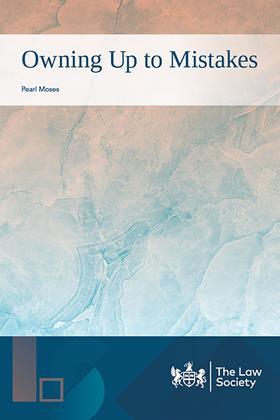
Owning Up to Mistakes (1st edition)
Pearl Moses
£90, Law Society
★★★★✩
Mistakes happen even to the most experienced practitioners and in the best-run offices. They are embarrassing, worrying and annoying. We promise to do better next time but somehow we do not. Some files seem to start badly and things only get worse. Difficult clients make difficult cases. The pressure of time, billing expectations, aggressive opponents, unapproachable colleagues and distant management can cause all sorts of problems.
This excellent book underlines the importance of acting with integrity when things go wrong. This means we should own up to mistakes as quickly as possible, say sorry, and have a proper plan to put things right. Do not panic is the best advice; take a deep breath and think carefully.
If I said that ‘I am sorry if this has upset you’, or ‘I’m sorry but what would you have done?’, or ‘I’m sorry but you could have…’, those are not apologies. A qualified or non-apology is not saying sorry. The Legal Ombudsman has made it clear that lawyers should acknowledge errors, be sincere and take steps to put things right. Having said that, when I have raised concerns on behalf of clients about authorities’ failures, these semi-apologies are exactly what clients get.
What we must avoid is the catastrophe of making matters worse by falsifying documents or being dishonest. This book has plenty of examples of people trying to cover up mistakes by backdating documents, or other lies. Owning up might be difficult – but losing a career is far worse.
There is guidance on how to handle errors and foster a culture of openness that is supportive. I do not recall things being like that early in my career! There are also excellent sections on wellbeing and the work of LawCare, all illustrated by case studies.
This thorough guide is great on what causes mistakes and how to lead, manage and deal with mishaps. Perhaps all firms need to have a mistake plan. Is it possible to recall money sent to the wrong bank account? How do you cancel an email sent to all? If firms were prepared and trained for the worst, this would help when errors occur. But we lawyers do not like admitting things went wrong, do we?
How mistakes are dealt with can often depend on the relationship between lawyer and client and the culture of the firm. If you have a good professional relationship with a client who understands that you are human and trying to help – that goes a long way.
I would have liked more practical guidance on preventing mistakes – in respect of backup diaries, emails and saying ‘no’ to work that we do not have time or experience to handle. It is the case in an unfamiliar area of law that keeps us awake at night.
Lawyers, like many professionals, are under overwhelming scrutiny. Sometimes, using ill-considered words or crossing professional boundaries causes no end of problems.
Another area that needs consideration is the attitude of indemnity insurers. Are they going to be happy if the insured apologises for an oversight and thereby accepts liability? We add information about the complaints procedure to retainer letters. Perhaps solicitors should add details about their policy on admitting mistakes?
A genuine and timely apology can work wonders. It is almost always best to get advice and face up to errors rather than ignore them.
David Pickup is a partner at Pickup & Scott Solicitors, Aylesbury








No comments yet