






















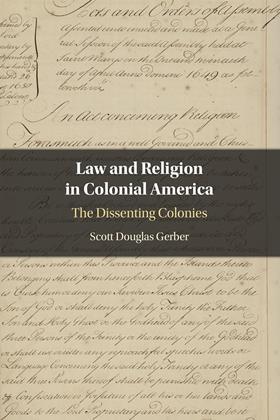
Law and Religion in Colonial America: the Dissenting Colonies
Scott Douglas Gerber
£29.99, Cambridge University Press
★★★★✩
I have often wondered if one purpose of colonialism was to find things to keep the nation’s more difficult citizens occupied.
If a ninth-century Norse clan chief had a group of restless and troublemaking young men hanging around, what better way to restore local peace than to get them together with similarly restless and troublemaking young men from neighbouring villages and send them off a-viking to pillage Northumbrian monasteries, or to sell their swords to the emperor in Constantinople. Ideally, they do not return, or they return sufficiently wealthy and adventure-sated that they are not inclined to be restless and troublemaking. Either way, problem solved.
The same instinct, I suspect, was at work in the peak period of European colonialism between the 16th and 19th centuries. Conquistadors, Puritans, the Cecil Rhodes-type figures with colourful lives and dubious reputations who flocked to India and Africa – all seem the kind of characters that the state might gently encourage to go their own way for the greater good.
In this work, the first volume of a study on the ‘animating principles’ of the 13 colonies that established the United States, Gerber considers five colonies which were founded with religious purposes.
Three stand out for commitment to religious freedom. Maryland, established by the Catholic Lord Baltimore, took an early lead, notably in its 1649 Act Concerning Religion. Gerber argues that Maryland – the clue is in the name – was intended as a haven for Catholics to practise their religion free from the persecution they experienced in England. Religious freedom was thus essential to both encourage Catholic immigration and protect them once they arrived. This ended after the Glorious Revolution of 1688/9 led to England’s Anti-Catholic Penal Laws being imposed on the colony.
Rhode Island too – established by preacher Roger Williams, whose views were frequently at odds with the religious establishment – had extensive protections for religious freedom. It became a particular destination for Quakers, a group founded in northern England, who had suffered persecution in other colonies but who eventually exercised significant political influence in Rhode Island.
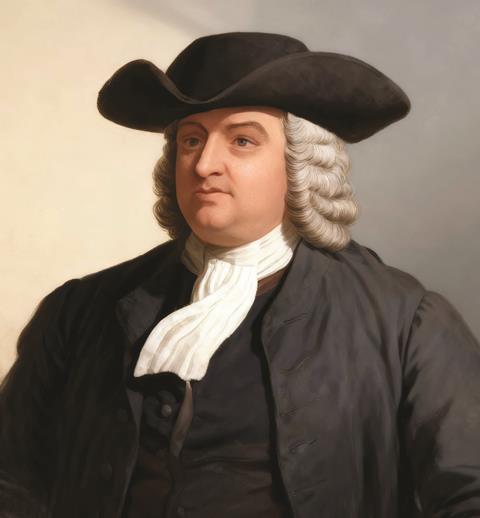
Pennsylvania, founded by Quaker William Penn (pictured), who suffered imprisonment and ostracism for his faith, was committed to ‘tolerance’ rather than mere ‘toleration’ – actively accepting, rather than merely acquiescing to, religious difference. Penn’s ‘Holy Experiment’ demanded that morals be given legal force; specifically, Quaker concerns such as prohibiting sports, alcohol and oaths were legislated, promoting complaints from other groups about violations of their religious freedom. Tellingly, however, Gerber notes that records show little litigation alleging religious discrimination in Pennsylvania; testament, he suggests, to the influence of Penn’s own spirit of tolerance.
Connecticut and Massachusetts were essentially theocratic, dominated by Congregationalists – a Reformed Protestant strand that sought to purge the church of anything that smacked of Catholicism, and which treated local congregations as self-governing – who saw Christianity as ‘a package that encompassed moral righteousness or rules about morality’, to be legally enforced. Connecticut’s first constitution was based on biblical precepts. Errant citizens could be punished for Sabbath-breaking, dancing, and – inevitably – being a Quaker. Law reports show judges often ignored statute and reached for scripture in adjudicating disputes and punishing crime.
The law was surprisingly egalitarian, but had little place for religious difference, at least until 1708 when a statute finally allowed dissenters to worship freely, provided they did not disturb the peace. Massachusetts – tracing its origins to the Plymouth and Massachusetts Bay colonies, founded by groups that left England to worship and govern themselves as they saw fit – took similarly biblical approaches to civic order. To be a ‘freeman’ and have full rights, one had to be a member of the approved church; offences against biblical law were firmly punished. Most notably, extensive campaigns of persecution were pursued against the unfortunate Quakers – barred on pain of death prior to intervention by the Crown. The witch trials that occurred in the town of Salem still have a hold on popular culture.
Cynically, one might say that the Puritans left England not to govern themselves, but to persecute in the way they wished. The English state notably sponsored and supported their emigration, and the approach of encouraging more difficult citizens to emigrate seems alive and well.
The work is exceptionally detailed, densely referenced and yet readable. Each colony is a self-contained chapter which can be read on its own, although the work is a coherent whole. The American colonial era is a fascinating one which, in my view, repays a bit of reading. This is certainly a good place to start. Maybe more for those with interests in the field, but also worth a read if legal history and religion are your things.
James E Hurford, solicitor, London







No comments yet